Toyota’s Race To Net Zero
Low-Carbon Racing, Sustainable Practices, And Increased Vehicle Electrification — Toyota Closes In On 2030 Goals
It’s a mid-June day in France. The safety car is moments away from pulling into the pits at the Circuit de la Sarthe. Once it does, the oldest endurance race in the world, the 24 Hours of Le Mans, will be underway. Three drivers per team. 24 hours of racing. A true testament of craftsmanship and reliability.
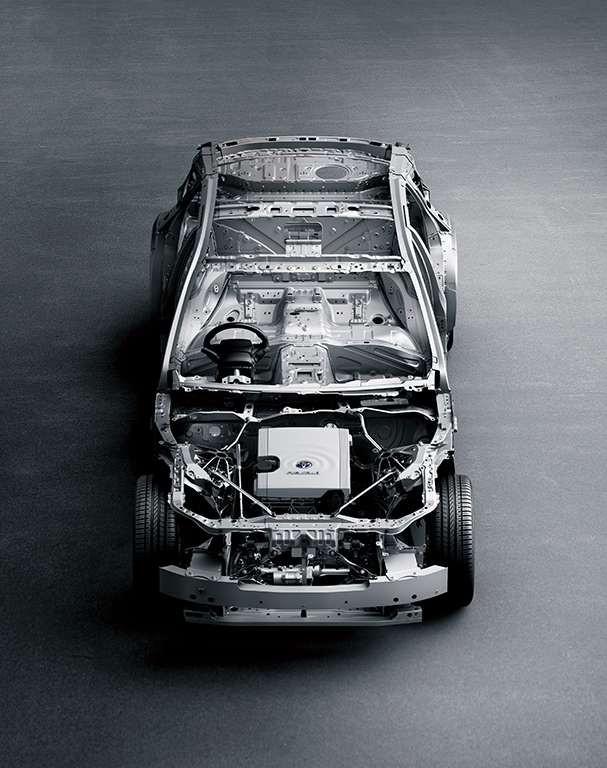
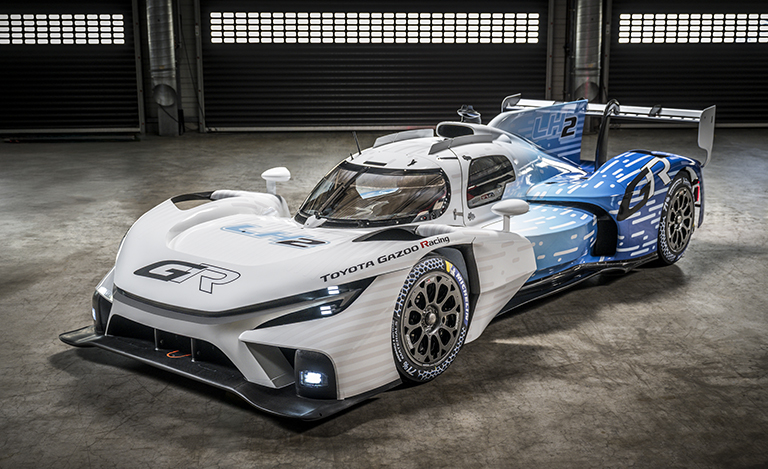
Traditionally, gasoline-powered cars dominated the race. But in recent years, sustainable fuels and prototypes that use hybrid powertrains have entered the fold. At this year’s event, Toyota Gazoo Racing unveiled the GR LH2 Racing Concept, a liquid hydrogen-fueled test car to advance the development of hydrogen technology in motorsports.
“Liquid hydrogen is 1.7 times more dense than gaseous hydrogen,” said Jacob Brown, mobility communications manager at Toyota. “Liquid hydrogen does not require the high pressurization of gaseous hydrogen but does require ultra-low temperatures to liquify -423°F (-253°C). As a result of the fuel form, tanks are oval shaped rather than circular, allowing for greater packaging freedom. Liquid hydrogen vehicles use internal combustion engines with unique parts. A booster pump delivers and vaporizes the fuel, turning it into gas and changing the pressure to supply hydrogen to match the throttle input from the driver. This differs from fuel cells that use gaseous hydrogen as the fuel source to make electricity.”
Although the prototype was shown strictly for exhibition and did not perform any laps at this year’s Le Mans, it still marked a technological leap in low-carbon racing. Just one month earlier, at the Fuji 24 Hours in Japan, alongside the H2 GR Corolla, Toyota campaigned a GR 86 powered by E20 fuel. Additionally, Toyota races E20-powered vehicles in the Super Taikyu series. “Toyota’s Gazoo Racing in Japan has been campaigning hydrogen-powered vehicles in motorsports for several years,” said Brown. “After a year of racing an H2 Corolla (and GR Yaris H2) that ran on gaseous hydrogen, Toyota wanted to explore liquid hydrogen opportunities due to its advantage of being able to offer longer driving range. Gazoo Racing has tested this technology in endurance races, some as long as 24 hours, to serve as a test bed for the technology.”
Reducing racing emissions is one thing, but what about the carbon footprint of Toyota’s entire production line? After all, Toyota is the largest automaker in the world, delivering over 10 million vehicles in 2024. Despite the majority of those vehicles being gas-powered, Toyota’s Beyond Zero vision includes the goal to reach entire vehicle lifecycle (manufacturing, driving, and recycling) carbon neutrality by 2050. However, unlike some companies that have identified a net-zero destination but provided no roadmap to get there, Toyota has outlined several near- and medium-term goals.
Delivering On Promises
Toyota is implementing low-carbon solutions across its business segments, from reducing greenhouse gas (GHG) emissions for passenger cars by eliminating gas-powered models to using renewable energy to power its manufacturing plants. The company has spent the last decade developing a science-based roadmap to improve its emissions reductions. In October 2015, it launched its Environmental Challenge 2050, which was created before the Paris Agreement.
Government policies aside, Toyota is proving it is dedicated to the energy transition. A spokesperson confirmed Toyota North America is committed to achieving the following goals in the next five years:
• Increase electrified options – whether it’s hybrids, plug-ins, battery electric, or fuel cell electric vehicles.
• Achieve 40% electrified new vehicle sales by 2025 (Toyota achieved this goal in the United States in 2024: 43.1% of total sales volume was electrified).
• Reduce absolute carbon dioxide (CO2) emissions from suppliers by 10% from fiscal 2018 levels by fiscal 2026.
• Reduce CO2 emissions from facilities by 25%.
• Increase purchased renewable electricity to 45% or more of total electricity purchased by 2025.
• Support the development of at least 26,000 acres (10,522 ha) of pollinator habitat by fiscal 2026.
Toyota has a goal to complete the establishment of battery collection and recycling systems globally by 2030. The company is working with partners to create a sustainable, closed-loop battery ecosystem to support its new battery manufacturing plant in North Carolina.
“Toyota’s goal is to create a sustainable, circular system where all batteries get recycled or reused, whether immediately after the first use or after being repurposed or refurbished,” said Brown. “Our mantra is ‘No battery goes untouched.’” By extending the lifecycle of automotive batteries beyond their ‘first use’ inside of Toyota vehicles, we are aiming to increase the value of our batteries while decreasing their impact on the environment. Reducing waste is a core pillar of Toyota’s sustainability strategy, and Toyota has long been committed to working to keep all batteries out of the landfill by reusing or recycling them. Since 2010, we have recovered and recycled over 182,461 hybrid vehicle batteries, totaling nearly 14.91 million pounds [6.76 million kg].”
This estimate is based on data as of November 2022 using an 82-pound (37-kg) average from Toyota’s Battery Lifecycle Solutions team.
Shifting Away From Gasoline Vehicles
Toyota Motor North America announced that the 2026 RAV4 will be an exclusively electrified model that will be available as a hybrid electric vehicle (HEV) or a plug-in hybrid electric vehicle (PHEV). It marks the first time the RAV4, which is the best-selling compact SUV in North America, will not offer any gas-only models. Each 2026 Toyota RAV4 will have an electric motor, either as an HEV or a PHEV. New 2026 RAV4 models are expected to start arriving at Toyota dealerships across the United States later this year.
“The sixth generation Toyota RAV4 in the US will have three distinct personalities, Core, Rugged, and Sport,” said Brown. “Starting from this generation, we chose to make the RAV4 100% electrified as another example of our commitment to reducing carbon emissions as much as possible, as quickly as possible. It is what our customers are asking for. Last year (2024), more than half of our RAV4 sales were electrified – so we are giving customers more of what they love. By adding a lineup of HEV/PHEV RAV4s, we can continue to grow our electrified sales mix while also giving customers powertrain choices that meet their lifestyle needs.”
The 2025 Toyota Camry was released as a hybrid-only model. The Toyota Sienna has been hybrid-only since its fourth generation, which debuted for the 2021 model year. “Our goal is to reduce carbon emissions as much as possible as quickly as possible,” said Brown. “Additionally, we want electrified vehicles to be accessible and affordable for our customers. Toyota is pursuing a multi-pathway approach because we believe offering a diverse array of ‘carbon reducing’ in the short-term and ‘carbon neutral‘ options over the medium- to long-term are the fastest ways to reduce carbon now and into the future. Toyota’s multi-pathway includes carbon-neutral, zero-emission BEVs and FCEVs, as well as carbon-reducing, low-emission PHEVs and HEVs. We can build great, reliable electric cars – but we need to help customers understand, afford, and ultimately adopt, this technology in order to have a real impact. To realize the long-term promise of electric mobility, Toyota supports a comprehensive public policy approach that encourages manufacturers to innovate across a diversity of drivetrains allowing drivers to choose the low- or zero-carbon drivetrain that suits their circumstances best.”
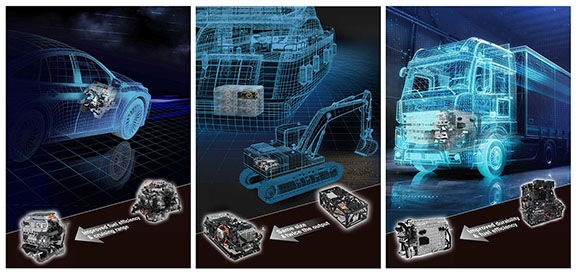
Toyota has pioneered advanced hydrogen fuel cell systems over the years, launching the Toyota Mirai in 2014. Earlier this year, Toyota announced the development of its third generation fuel cell system. “Hydrogen technology offers one way to help Toyota achieve its carbon-neutrality goals,” said Brown. “As the most abundant element in the universe, hydrogen is an energy source that can be produced locally and from renewable sources such as wind, solar, and biowaste. Hydrogen represents an important part of our multi-pathway approach to decarbonization, both in our vehicles and in our operations. Hydrogen-powered fuel cells may be a solution for a wide range of scalable applications across many sectors, including transportation. From passenger vehicles to commercial transport, fuel cells provide a zero-emissions alternative for a variety of applications. The technology is scalable for use in commercial, heavy-duty, and non-automotive applications, such as heavy-duty fuel cell trucking, stationary fuel cell generators, and energy storage. Regarding customer feedback, Toyota’s fuel cell powertrains have been on sale in ASEAN [Association Of Southeast Asian Nations] regions for years, and we recently announced third generation fuel cell powertrains which has focused on durability, cost, and total cost of operations. The Gen 3 fuel cell powertrain will be fitted to one of three types of use cases – light passenger, construction/stationary power generation, and heavy truck – based on the unique feedback we received from customers using previous Gen 1 and Gen 2 systems.”
Sustainable Practices
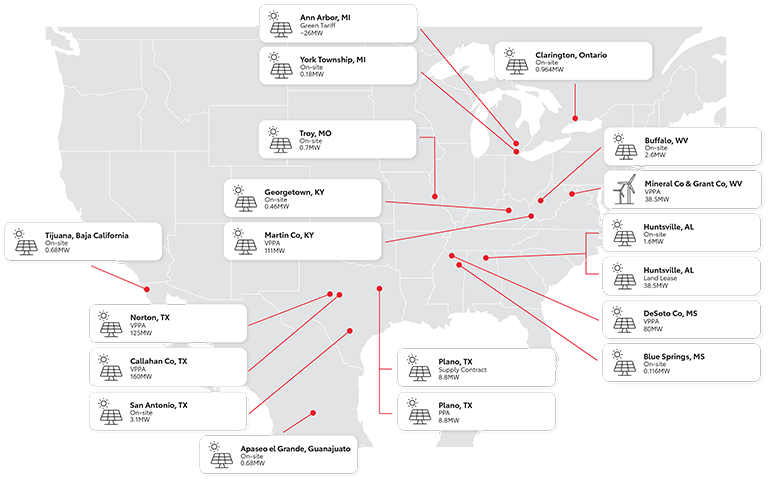
Toyota has the goal to achieve carbon neutrality for CO2 emissions at global manufacturing plants by 2035 and to reduce absolute Scope 1 and Scope 2 GHG emissions by 68% by 2035, compared to 2019 levels. In North America, Toyota has targeted 45% or more of total electricity purchases to come from renewable sources by fiscal 2026. According to Toyota, the company is on track to achieve this goal by early fiscal year 2026. More will be shared in the next North American Environmental Sustainability Report in late 2025 as to what progress was made in fiscal year 2025 across Toyota’s North American operations.
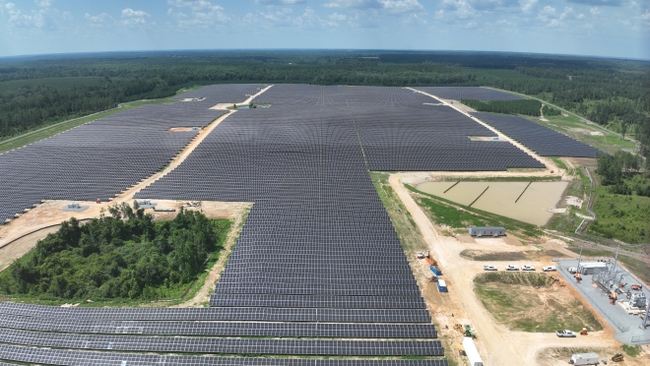
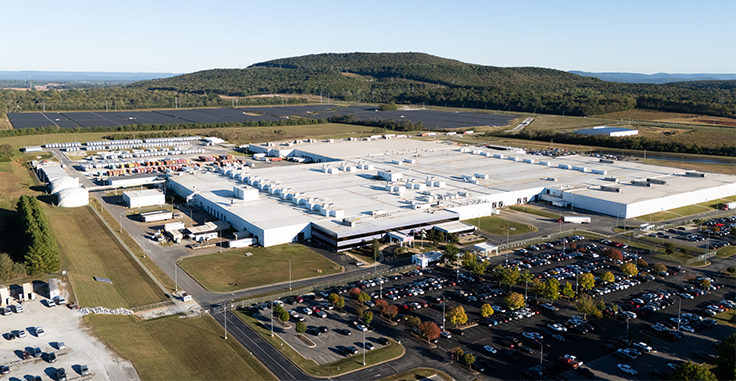
Efforts like Toyota Alabama’s solar project are helping Toyota North America progress on its renewable energy goal. The solar array in Alabama will generate about 70% of Toyota Alabama’s total energy usage. In total, the array will generate approximately 62,000 MWh of energy on an annual basis, reducing an estimated 24,251 tons (22,000 tonnes) of carbon dioxide emissions per year.
“The on-site solar array in Huntsville, Alabama, came online in the summer of 2024,” said Brown. “This is part of Toyota’s renewable energy efforts to offset production electricity by 45% with a combination of onsite and offsite renewable energy. In addition to the on-site and off-site solar and wind energy projects, some of the other ways Toyota is working to reduce electricity needs in manufacturing include skylights on the production floor, LED lighting, and optimized process time to reduce redundancies on the production line (e.g., tugger routes and welding times).”
Toyota is also making progress on reducing its emissions from its non-manufacturing infrastructure, such as office buildings and associated facilities. “At the North American Toyota headquarters in Plano, Texas, the building was designed to utilize more natural lighting throughout and optimize lighting times,” said Brown. “On-site solar panels make up about 20% of the buildings’ power needs, and other energy is purchased from renewable sources. Additionally, on-site water cisterns retain up to 40,000 gallons [151,416 liters] of water used for landscaping and non-potable water usage across the corporate campus. Native landscaping also reduces the amount of water needed to maintain drought-tolerant plants during the hotter months of the year.”
Thinking Outside The Box
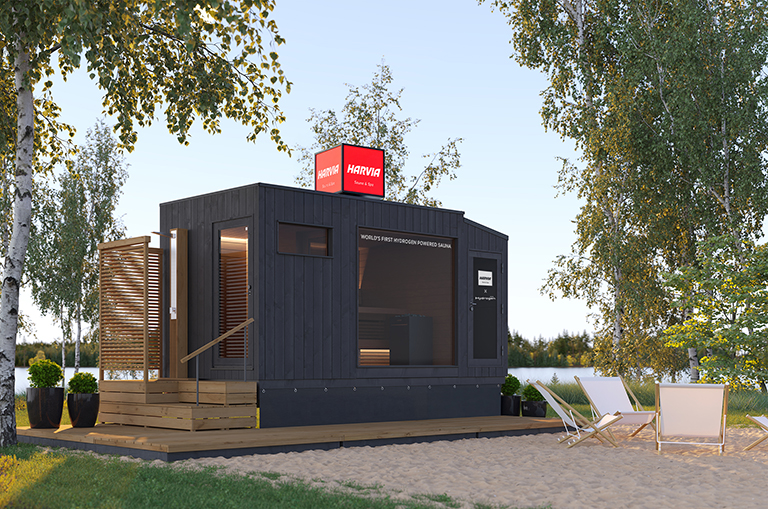
Toyota is involved in a number of creative efforts that embrace the energy transition. For example, its hydrogen-powered sauna concept model with Harvia generates only steam and warm air, emitting no CO2 during use. This offers an attractive alternative to conventional heating methods. The concept model aims to capture the essence of a traditional smoke sauna, which is known for its gentle and soothing properties. The hydrogen combustion heater channels flames and warm air through sauna stones, heating them evenly from all sides. The process produces steam when water is poured on the stones.
“This collaboration came as a result of the strong sense of community Toyota and the Toyota Gazoo Racing World Rally Team have had in the Jyväskylä,” said Brown. “Thanks to the Central Finland Mobility Foundation (CEFMOF), Toyota was able to work with Harvia to bring this project to fruition. CEFMOF contacted Harvia in Finland to inquire about the possibility of applying hydrogen combustion technology to sauna products, which led to the joint development of a hydrogen sauna by Harvia and Toyota. We intend to advance discussions alongside the demonstration of the hydrogen supply chain, but nothing has been decided at this time.”
Harvia developed the sauna room and stove, while Toyota developed the hydrogen combustion control system and hydrogen burner. The hydrogen burner, which was co-developed with Rinnai, has been modified to be suitable for use in the hydrogen sauna. When hydrogen is burned, it reacts with oxygen to produce water, and the combustion generates water vapor, which helps maintain the high humidity that is considered essential for a sauna.
Since carbon monoxide is not produced, combustion inside the sauna room does not require exhaust systems, making maintenance easier. The hydrogen cartridges powering the sauna have a diameter of 7.9 inches (200 mm), a length of 22.8 inches (580 mm), and a weight of 18.7 pounds
(8.5 kg). For reference, it is the same as the hydrogen cartridge exhibited at Japan Mobility Show Bizweek 2024.
Investing For The Future
Toyota’s combination of short-, medium-, and long-term climate targets across its business segments embody its commitment to the energy transition. The company has a long way to go to reach carbon neutrality by 2050, but its 2030 goals would mark a major milestone and a significant transformation from the company’s carbon footprint based on its 2019 base.
“From vehicles to supply chains to working with other companies and organizations, the goal of carbon neutrality is at the heart of most everything we do,” said Brown.
Toyota embodies a true profile in environmental stewardship and is a company that recognizes the importance of taking environmental, social, and governance factors into consideration instead of being motivated purely by profit.