Port Arthur’s Texas Two-Step
Port Arthur Phase 2 Reaches FID, Adds To Growing List Of Funded US LNG Export Projects
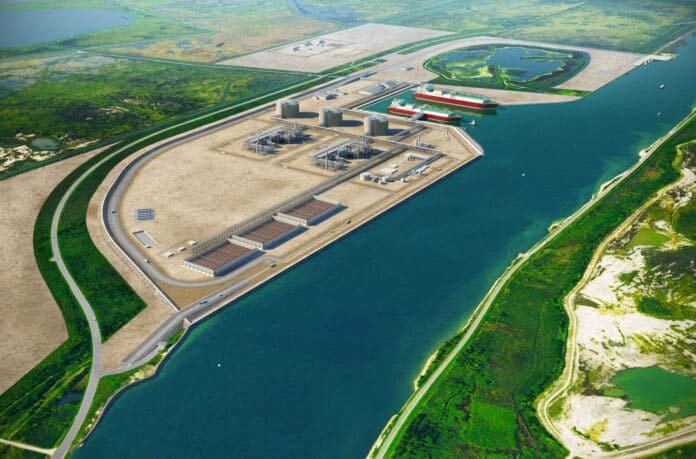
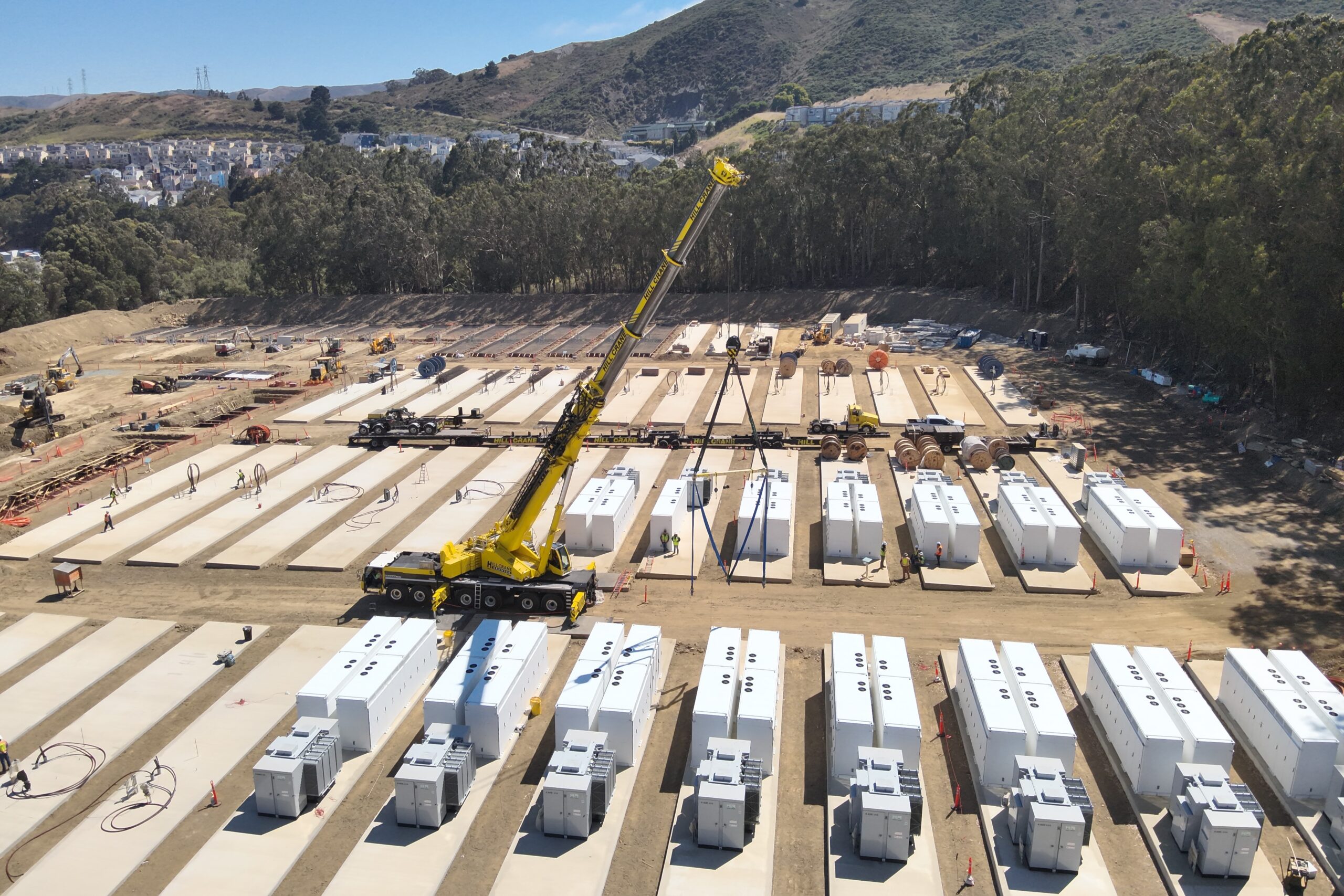
(Image Courtesy Of Port Arthur LNG, Sempra Infrastructure)
Port Arthur LNG has undergone major shakeups in recent months, resembling a kind of back-and-forth country western dance deep in the heart of Texas.
Phase 1 of the LNG mega project, located near the Sabine-Neches ship channel in Jefferson County, Texas, is split between Sempra Infrastructure’s 70% ownership and ConocoPhillips’ 30% stake. Phase 1 includes two liquefaction trains, two liquefied natural gas (LNG) storage tanks, and has a nameplate capacity of 13 MTPA. The project is fully subscribed by long-term contracts with ConocoPhillips, RWE, INEOS, Engie, and Polish energy giant Orlen. Construction is underway, with Train 1 expected to begin commercial operations in 2027 followed by Train 2 in 2028.
Even though Phase 1 is still a couple of years away from getting off the ground, Phase 2 is attracting a significant amount of attention from investors, offtake partners, and subcontractors. Sempra has announced the sale of a 45% equity interest in Sempra Infrastructure to affiliates of global investment firm KKR and the Canada Pension Plan Investment Board. Subject to adjustments, the transaction proceeds of US$10 billion implies an equity value of US$22.2 billion and an enterprise value of US$31.7 billion for Sempra Infrastructure. The transaction is expected to close in the second or third quarter of next year, subject to necessary regulatory and other approvals and closing conditions.
The KKR-led consortium will become the majority owner of Sempra Infrastructure with a 65% equity stake, while Sempra will hold a 25% stake and Abu Dhabi Investment Authority will own a 10% stake.
The same day the ownership change was announced, Sempra said that it reached a final investment decision of Phase 2 of Port Arthur LNG. The project will include two natural gas liquefaction trains and one LNG storage tank. Similar to Phase 1, the nameplate capacity will be 13 MTPA, bringing the project’s total to 26 MTPA. For context, NextDecade’s Rio Grande LNG will have an export capacity of 28 MTPA upon completion of its fifth LNG Train, which is just shy of the export capacity of Cheniere’s Energy’s Sabine Pass LNG project (see “Mergers & Markets: NextDecade’s Grande Slam,” October 2025 Gas Compression Magazine, p. 6).
Funding for Phase 2 is supported by an equity investment led by Blackstone Credit & Insurance, together with an investor consortium including KKR, Apollo-managed funds, and private credit at Goldman Sachs Alternatives. Together, these investors have acquired a 49.9% minority equity interest for US$7 billion. Sempra Infrastructure has retained a 50.1% majority stake in the project.
Pipelines And Compressor Stations
In addition to the liquefaction trains and storage tanks, Port Arthur Phase 1 includes the Texas Connector Pipeline. At 34 miles (55 km) long, it connects Port Athur LNG to the intrastate natural gas pipeline grid in Texas and provides feed gas to the terminal.
The 131-mile-long (211 km) Louisiana Connector Pipeline serves a similar function by connecting Port Athur LNG to the interstate pipeline network in Louisiana. The pipelines allow Port Athur LNG to source natural gas from the Permian Basin and other US shale plays. For now, each pipeline includes one compressor station, although compression capacity expansions will be needed to handle the additional 13 MTPA of export capacity demanded by Phase 2.
All told, Sempra expects US$12 billion of incremental project capital exposures for Phase 2, plus an approximate US$2 billion payment for shared common facilities, with commercial operations expected in 2030 and 2031 for Trains 3 and 4, respectively.
Enter The Contractors
On May 29, Sempra Infrastructure received a permit from the US Department of Energy (DOE) for the export of up to 13.5 MTPA of US-produced LNG to countries that no not have a free-trade agreement (FTA) with the US. According to Sempra Infrastructure, it was the first non-FTA permit issued since the completion of the DOE’s most recent public interest study.
After achieving DOE approval and reaching FID, Sempra Infrastructure issued a full notice to proceed to Bechtel Energy (Bechtel), which is continuing its involvement from Phase 1. Phase 2 is subscribed with multiple long-term contracts. On July 31, Sempra Infrastructure and JERA signed a 1.5 MTPA 20-year sale and purchase agreement (SPA). On Aug. 21, Sempra Infrastructure and ConocoPhillips signed a 20-year SPA for 4 MTPA of Port Arthur LNG Phase 2, building upon ConocoPhillips’ 5 MTPA contract and 30% ownership of Phase 1. On Aug. 27, Sempra Infrastructure and EQT Corp. signed a 2 MTPA 20-year SPA. With roughly 5.5 MTPA unsubscribed, Sempra Infrastructure said that it expects to enter into additional offtake agreements to enhance the economic value of the project.
Baker Hughes’ Growing Role In LNG Projects
On Oct. 1, Baker Hughes announced a contract by Bechtel for key liquefaction equipment for Port Artur LNG Phae 2, include four Frame 7 turbines, eight centrifugal compressors across both LNG trains, and two electric motor-driven compressors for the plant’s booster services. The package is nearly identical to what Baker Hughes provided Sempra Infrastructure for Phase 1.
“Building on our successful collaboration with Baker Hughes on Phase 1 of the Port Arthur LNG project, we look forward to achieving more LNG project milestones together,” said Bhupesh Thakkar, general manager for Bechtel’s LNG business. “Baker Hughes’ technology solutions play a key role in our ability to enable the expansion of LNG capacity at Port Arthur LNG.”
Baker Hughes’ Frame 7 gas turbines, paired with centrifugal compressors, are widely used in LNG projects due to their low emissions profile, fuel flexibility, and high efficiency. The Frame 7/1EA turbines use dry low NOx combustion systems capable of single-digit NOx emissions that reduce local air pollutants compared to older turbine designs. These turbines can run on natural gas, LNG boil-off gas, or even hydrogen blends, which supports decarbonization and low carbon fuels as the hydrogen economy gains momentum. The Frame 7 turbine, coupled with centrifugal compressors, are optimized for LNG duty cycles and are mechanically efficient, thereby minimizing wasted energy in the liquefaction process.
“We are delighted to continue as a key technology provider to Bechtel and Sempra Infrastructure in the ongoing expansion of the US Gulf Coast LNG complex,” said Ganesh Ramaswamy, executive vice president of Industrial & Energy Technology at Baker Hughes. “This award builds on our track record of providing efficient, reliable LNG technology solutions that strengthen the global gas value chain and support a consistent supply of energy worldwide.”
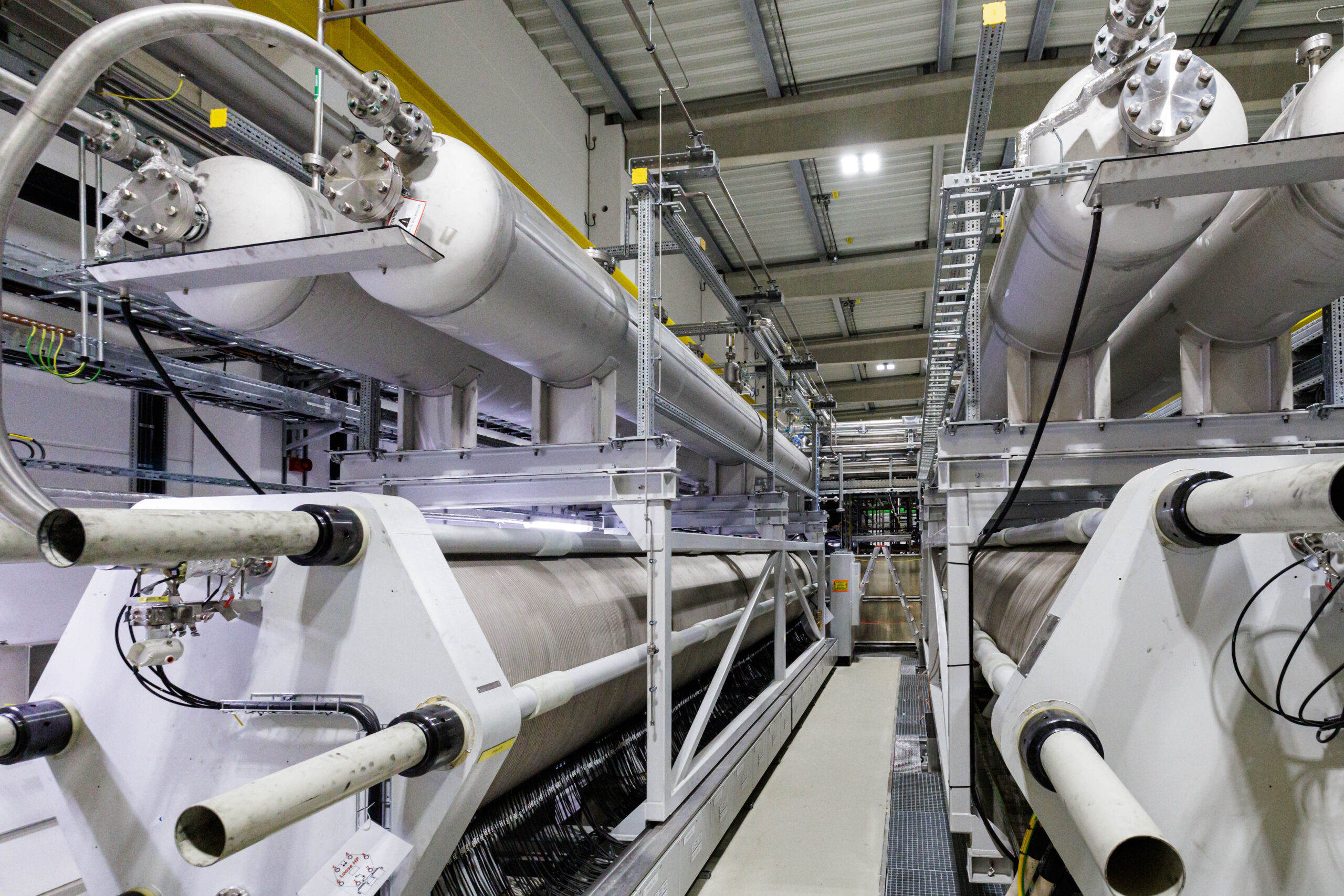
Baker Hughes is landing LNG business left and right thanks to its modularized approach. Unlike traditional stick-built construction, many of its projects use modules that house turbines, compressors, heat exchangers, and other equipment. These modules are fabricated off-site and then shipped to the site for final assembly, improving quality and safety and reducing on-site weather risk and labor hours. The strategy allows a facility to operate and expand concurrently.
Baker Hughes’ acquisition of Chart Industries (Chart) gives the company even more of a presence in heat exchangers, small-scale compression, and cryogenic equipment, allowing Baker Hughes to support large and complex energy and industrial projects (see “Baker Hughes Buys Chart, September 2025 Gas Compression Magazine, p. 48). On Oct. 6, Chart announced an award by Bechtel to supply air-cooled heat exchangers, brazed aluminum heat exchangers, and cold boxes for Port Arthur Phase 2. Similar to Baker Hughes’ deal, this package mirrors what was provided for Port Arthur LNG Phase 1.
“Chart is proud to provide our LNG equipment to support the Sempra Infrastructure Port Arthur LNG Phase 2 development project,” said Jill Evanko, chief executive officer and president of Chart. “We congratulate the Sempra Infrastructure and Bechtel teams on the progress made to date at Port Arthur LNG and the decision and execution to bring more scale to this site.”
By acquiring Chart, Baker Hughes will be able to win a larger share of major LNG projects. Based on the size of past deals, industry experts estimate that the value of Baker Hughes’ turbomachinery package for Port Arthur Phase 1 was roughly US$600 million to US$800 million, and Chart’s deal is worth around US$150 million to US$200 million. Combined, that’s about 7.5% to 10.5% of the total size of the Bechtel engineering, procurement, and construction contract.
Texas LNG On The Global Stage
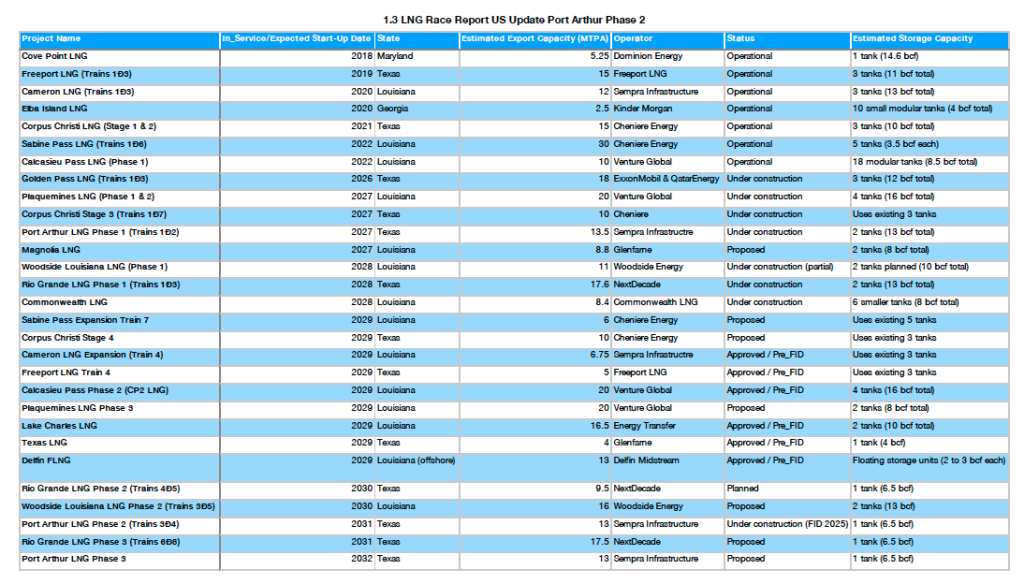
Port Arthur LNG will join Corpus Christi LNG, Freeport LNG, Rio Grande LNG, and Golden Pass LNG as one of the major LNG export projects along the Texas portion of the Gulf Coast. Based on LNG projects that are operational, under construction, and planned or proposed, Texas and Louisiana are on track to exceed a combined 360 MTPA of LNG export capacity over the next decade. If all goes according to plan, the US Gulf Coast will be a larger LNG export hub than Qatar, even when factoring in the country’s North Field East, South, and West expansions through 2030.
LNG continues to be arguably the biggest catalyst for growth in the US natural gas industry. When asked which natural-gas based fuel holds the most opportunity for growth in the next five years, 42% of respondents from our 2024 Reader Survey picked LNG compared to 25% for hydrogen, 17% for compressed natural gas, 15% for renewable natural gas and biofuels, and 1% for other (see “2024 Reader Survey,” December 2024 Gas Compression Magazine, p. 32). The flurry of LNG projects reaching FID, paired with Baker Hughes’ acquisition of Chart, are votes of confidence that capital spending on US LNG is accelerating and confidence is high that the industry is undergoing a period of multi-year or possibly even multi-decade expansion.