Nissan Adds Solar Roof To Sakura EV
Roof-Mounted Ao-Solar Extender Can Charge The Vehicle While Driving Or When Parked
(Image Courtesy Of Nissan)
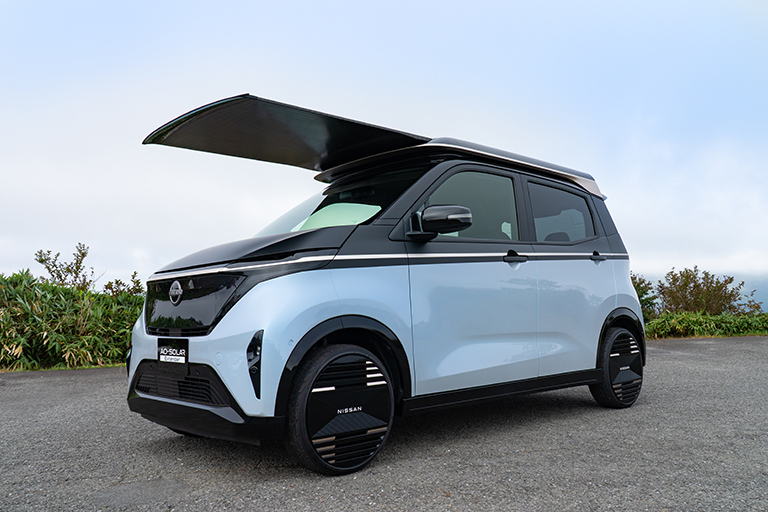
Nissan has developed an onboard solar power generation system for Japan’s top-selling electric vehicle (EV), the Nissan Sakura. Named the Ao-Solar Extender, the solar panel system is designed to reduce reliance on the grid and enhance the convenience of EV ownership by simplifying charging. The team developing the system estimates that, on an annual basis, it can generate enough solar electricity to power up to 1864 miles (3000 km) of driving based on Nissan internal measurements. Actual mileage may vary depending on sunlight conditions.
The name “Ao-Solar” is derived from the Japanese word Aozora, meaning blue sky, and solar, symbolizing the use of solar energy and expressing harmony with nature. Integrating solar technology into the Sakura exemplifies Nissan’s commitment to sustainable mobility solutions that resonate within Japan’s highly competitive Kei segment, which is the smallest category of Japanese expressway motor vehicles.
(Image Courtesy Of Nissan)
The roof-mounted Ao-Solar Extender can charge the vehicle both while driving and when parked. The fixed roof-mounted panel can capture solar energy even when the vehicle is in motion. When stationary, an additional panel extends outward from storage, increasing the solar panel surface area and power generation potential to approximately 500 Watts. The expanded panel also creates shade and helps block sunlight from entering through the windshield, reducing cabin temperature and lowering the need for air conditioning power consumption. The system has been designed to minimize drag and integrate with the Sakura’s overall appearance.
Nissan’s Sakura was Japan’s best-selling EV for the past three consecutive years. With the installation of the Ao-Solar Extender, the development team hopes that users can further reduce reliance on charging infrastructure. Analysis of driving data from Sakura owners shows that many primarily travel short distances for errands and school runs, suggesting that solar-generated power could nearly eliminate the need for grid-based charging for a significant portion of owners. Moreover, the solar system can serve as an emergency power source during disasters.