Clean Energy Uptake Has A Multi-Speed Trajectory
BloombergNEF Data Shows Some Clean Energy Technologies Are Thriving While Others Are Struggling To Scale

Clean and green energy technologies tend to receive inordinate amounts of hype. President George W. Bush famously talked up hydrogen fuel cells 25 years ago. Yet here we are today with the technology remaining in a state of immaturity.
Similarly, the nuclear renaissance was a huge deal just prior to the Fukushima disaster in 2011. Now, small modular reactors (SMRs) are the recipient of a new wave of enthusiasm.

The point is that there can be a lot of noise about the latest and greatest. The reality is that some technologies make it, and others don’t. Jon Moore, chief executive officer of energy transition analyst firm BloombergNEF, made this point during a presentation at the Baker Hughes Annual Meeting in late January 2026 in Florence, Italy.
“We have a multi-speed energy transition which is driven largely by economics,” he said. “Some clean energy sources are progressing rapidly, while others are struggling to scale.”
Grid Spending Surge
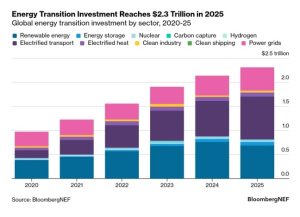
Moore ran through an array of statistics on how the market is evolving. Out of US$2.3 trillion in energy transition investment in 2025, grid spending exceeded US$500 billion. This is a vital area as all forms of power generation depend upon it.
“Grid bottlenecks have become a big topic,” said Moore. “The year saw a 70% increase in grid investment worldwide.”
These funds can’t come soon enough. The North American grid, for example, is aging poorly at a time when it is being asked to meet escalating demand from artificial intelligence (AI) factories. A largely ignored US Department of Energy study from 2019 found that 10,000 miles (16,093 km) of new transmission per year were needed. The response in 2020 was a mere 400 miles (644 km) of new transmission. Each year thereafter has seen little change. To make progress on new lines even harder, as many as 100,000 miles (160,934 km) of old transmission lines will probably have to be replaced.
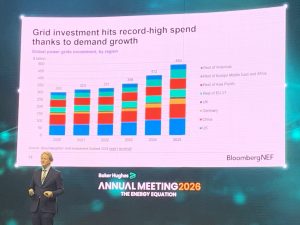
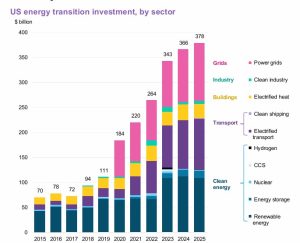
Fortunately, the US has finally gotten the message. US$115 billion was allocated to the grid in 2025. Another US$1.1 trillion is planned for the next five years. This level of spending on the grid is on par with investment in renewables.
Clean Energy Falters
Overall investment in clean energy, though, was slightly down in 2025. This was mainly due to China cutting back on renewable projects. That’s the first drop in this statistic in about 15 years, added Moore. Biofuels spending was also down worldwide.
“There are huge opportunities for innovation to stimulate new growth, but mature technologies are scaling faster,” said Moore.
Overall, clean energy investment in Europe, the Middle East, and Africa (EMEA) grew by 21% in 2025. US renewable investment continues to rise as well. It was up 4.5%, with spending remaining slightly ahead of what is allocated to traditional energy sources. As a comparison, Europe spends US$2.5 on clean energy for every US$1 spent on traditional sources.
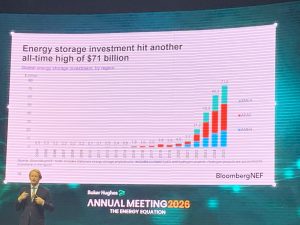
On a planetary scale, Moore said that until 2020, investment in traditional energy sources dominated. Today, clean energy has moved ahead and is widening the gap. This is showing up, for example, in spending on energy storage funding, which continues to rise sharply. Moore said the drivers for greater storage investment included a 31% drop in storage costs over the past year and the push to integrate more renewables into global grids.
“Energy storage investment topped US$71 billion globally in 2025 and was strong in almost all areas,” said Moore.
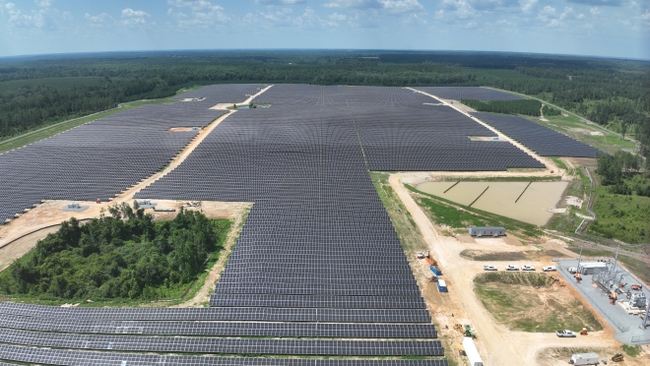
Solar spending, both utility-scale and small-scale, accounted for about two-thirds of the global total of renewable energy investment of US$690 billion in 2025. Onshore and offshore wind are next. Compared to wind and solar, investment in all other forms of renewable energy is minuscule.
Additionally, electric vehicle (EV) spending remains strong. Asia Pacific leads the way on EVs. Within the Americas, EV spending is rising each year. The biggest jumps were from a few billion in 2020 to US$44 billion in 2021, US$74 billion in 2022, US$98 billion in 2023, and US$123 billion in 2024. The 2025 total of US$128 billion suggests that the pace of EV adoption is slowing. This is supported by the losses incurred by US automakers due to new EV models that haven’t met their sales projections.
Moore added, however, that the growth in electrified commercial vehicles and clean shipping vessels had the highest percentage growth among the various segments of electrified transportation. Clean shipping funding jumped from half a billion to US$4.2 billion for the year.
Clean Technology Struggles
Heat pump spending is flat as it is largely driven by incentives. Moore commented that property owners in the US and elsewhere have been slow to adopt heat pumps despite the technology receiving plenty of media promotion.
Two other well-hyped technologies are also failing to hit critical mass.
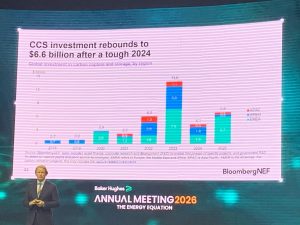
“Investment in hydrogen and carbon capture and storage (CCS) peaked in 2023,” said Moore. “Green hydrogen investment fell for the second year in a row, and only the Americas sustained hydrogen investment levels due to one blue hydrogen project.”
Part of the reason for this is cost. CCS and hydrogen remain expensive. Global hydrogen investment went from next to nothing in 2021 to US$13.2 billion in 2023. It sagged in the last two years and is now at US$7.3 billion, indicating that enthusiasm is fading. Meanwhile, CCS fell from US$13.6 billion in 2023 to US$4.1 billion in 2024. It rebounded somewhat in 2025 to US$6.6 billion. Almost all of this was in EMEA. CCS investment in the Americas has dried up, for now.
Nuclear Dip
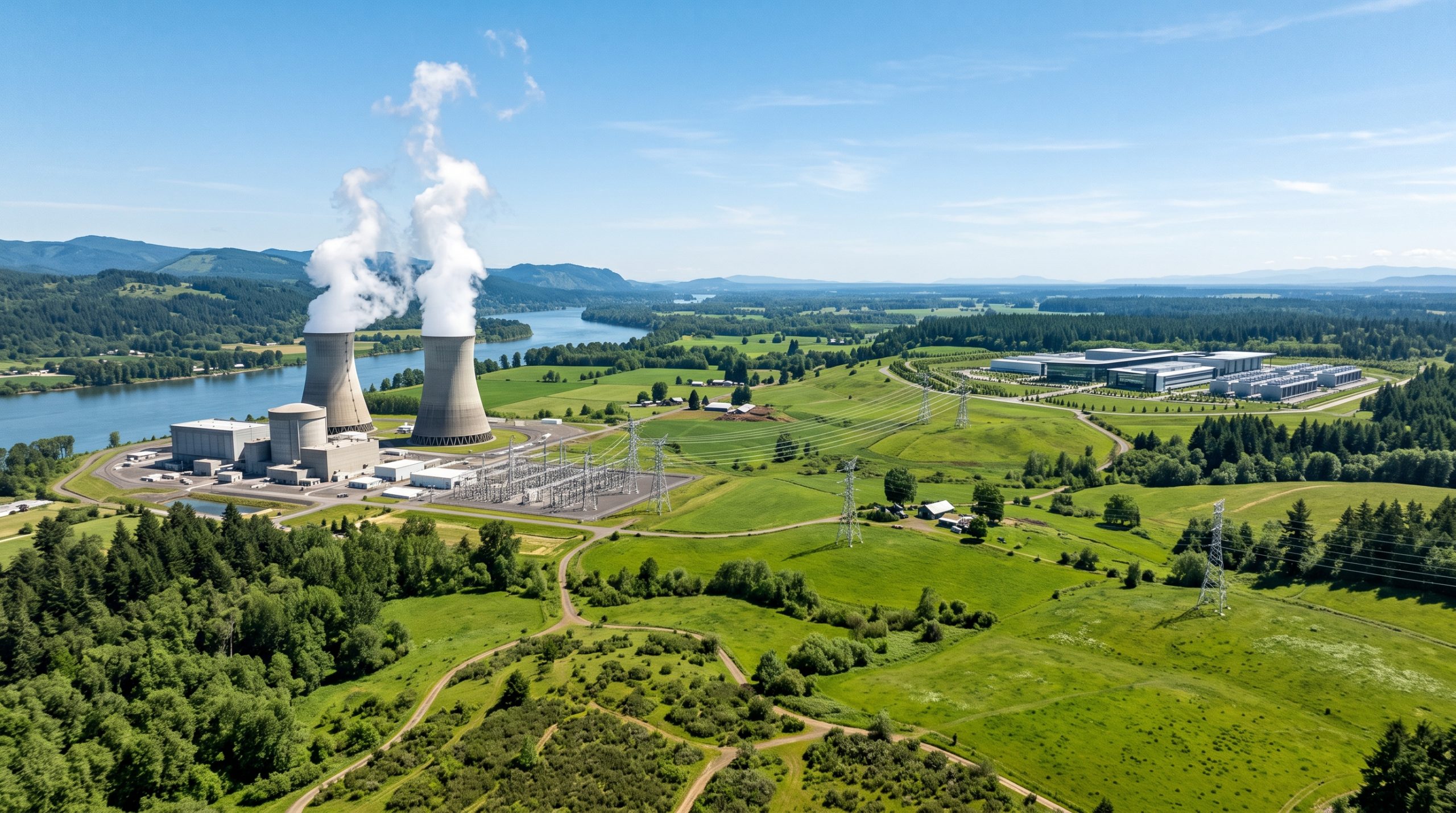
Perhaps the biggest surprise is the level of nuclear energy spending. Nuclear is being talked up like never before. It has transitioned from pariah status to “clean energy darling” over the past two years. Yet BloombergNEF data shows that spending dropped in 2025 from US$37.8 billion to US$35.6 billion. Two-thirds of the total came from EMEA and China.
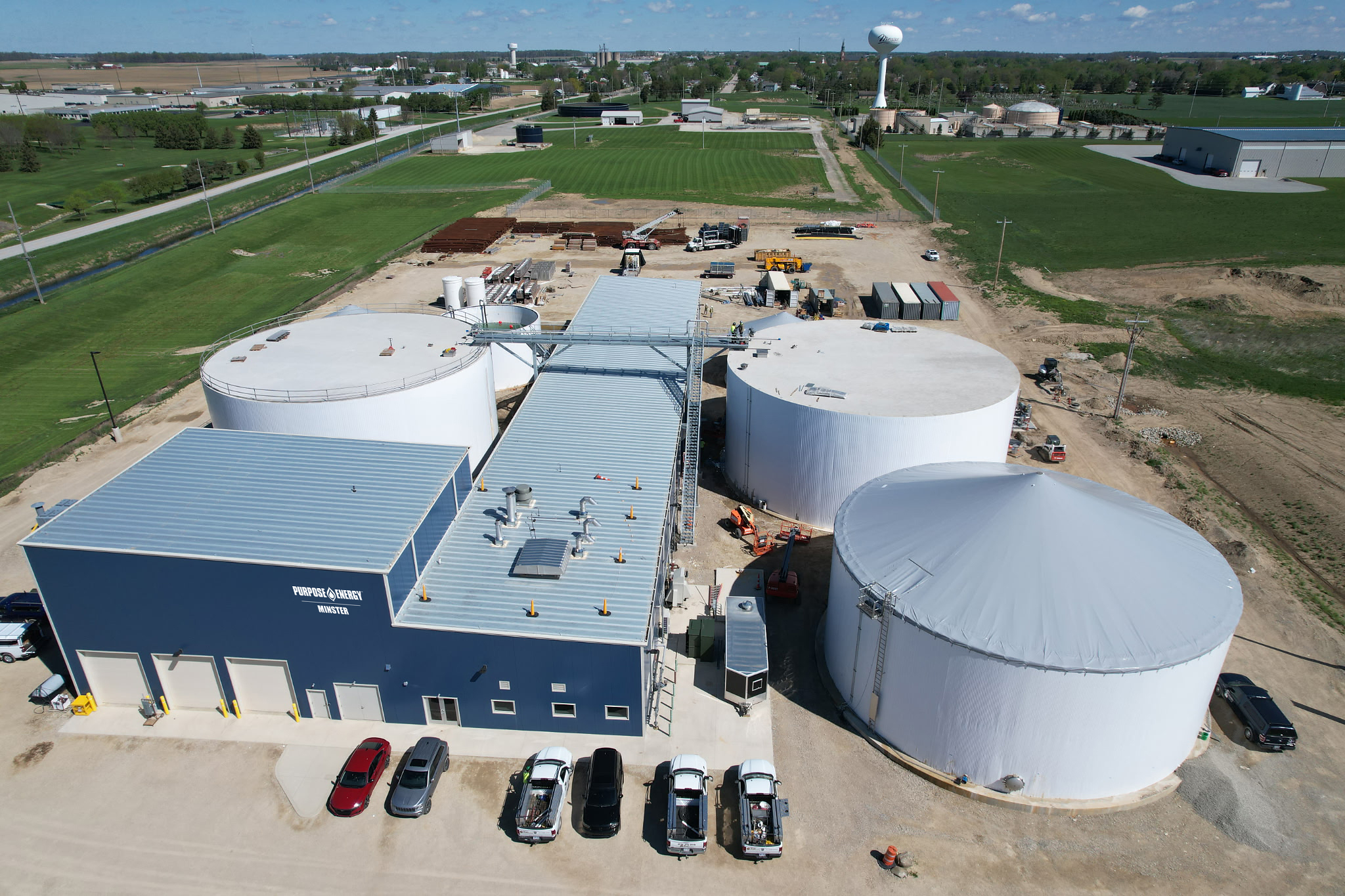
Biofuels, too, are struggling. Its halcyon days were about 20 years ago, when it peaked above US$20 billion in annual investment. That sank to next to nothing by 2015. The last few years have witnessed a minor rebound. But biofuels only attract about US$5 billion a year now, and they had a down year in 2025.
Data Center Spending
The capital expenditures of the largest publicly owned data center operators was US$441 billion worldwide in 2025. Moore predicts that it will rise to US$712 billion by 2029. Investment varies widely by geography, with the US dominating by a large margin in both spending and live information technology capacity, according to Moore.
“We are seeing a multi-speed energy transition that is very different when you view it according to technology and geography,” said Moore.