From Gas Fields To Small Modular Reactors
Inside The Power Race Fueling America’s AI Factories

Data centers continue to expand at an unprecedented rate. There are more than 12,000 active projects in the US currently seeking grid interconnection, representing 1570 GW of generator capacity and 1030 GW of storage. According to Boston Consulting Group, data center power consumption is expected to grow from 2.5% of US electricity to 7.5% over the next five years, driven by artificial intelligence (AI).
It is no surprise, then, that when developers request more power from utilities for ever-larger “AI factories,” they are often disappointed. In many areas, the grid just doesn’t have the capacity and is unlikely to have it for many years. Hence, 62% of data centers are exploring on-site power generation, and 19% have already implemented it. AI factory developers want power now.
Rather than relying on the congested grid, many AI infrastructure companies are becoming active energy developers through on-site microgrids, private power purchase partnerships, and small modular reactors (SMRs) for producing nuclear energy. Controlling their own electricity supply through a concept called bring your own power (BYOP) removes the risk of regional grid failure and allows developers to achieve sustainability goals.
“Securing sufficient power from the grid has become a growing challenge, driving interest in onsite generation,” said Jennifer Cahill, associate vice president, campus infrastructure integration lead at Black & Veach, who works with data centers, colocation providers, and developers on infrastructure construction. “A data center can be up and running in 18 months while a new power plant typically takes three to five 5 years.”
A survey of energy industry stakeholders by her company found that only 19% of respondents expressed confidence in power load forecasting for AI demand. They felt there was a need for better tools and faster processes to meet the unprecedented demand for infrastructure construction at warp speed.
The survey also found that grid digitalization is exposing utilities to escalating cyber threats as device networks expand into the millions. 40% of respondents prioritize cybersecurity training over investing in new security tools, recognizing that technology alone cannot address human vulnerabilities. They are prioritizing practical strategies like backup systems (40%), vegetation management (30%), and freeze protection (27%) to address climate impacts.
The survey found that nuclear energy is gaining ground as a potential investment, with 47% expressing interest in SMRs. According to the survey, federal climate policy shifts are not reshaping utility plans, as 34% of respondents expect no impact, and 47% say they will stick to current strategies even if regulations ease.
But the biggest issue is a lack of power. 53% of utilities cite limited available power as the top obstacle to getting data centers online, with transmission (47%) and substation upgrades (46%) close behind.
Bridging Power Options
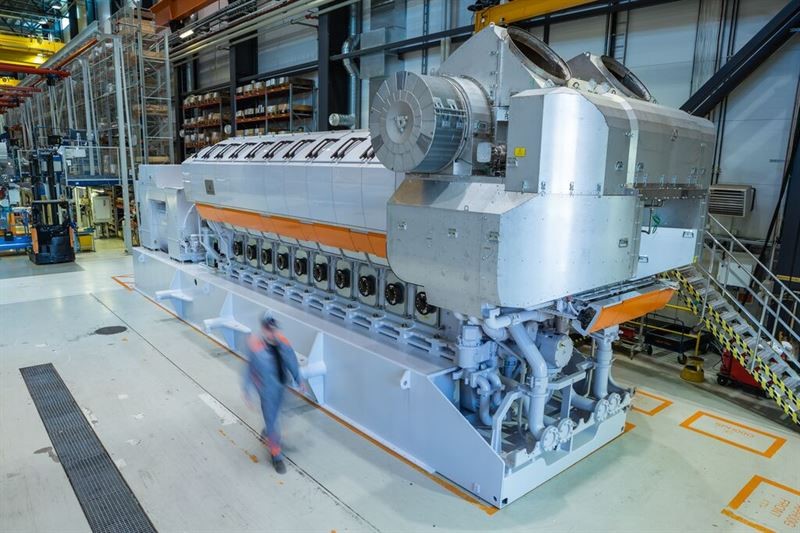
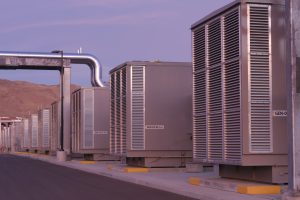
To address this challenge, many data center developers and utilities are selecting gas turbines while others gravitate toward large gas engines. This, in turn, creates another series of problems. Existing transmission, power distribution, and pipeline infrastructure requires fresh investment to satisfy demand. Lead times on equipment are also lengthening. Gas turbines often require a wait time of three to four years due to heavy demand.
“Gas engines are becoming a popular alternative as they generally have shorter lead times,” said Dave Bell, vice president of data center and microgrid development at VoltaGrid. His company bought up a lot of gas engines a few years ago and is supplying them in quantity to data centers and oil and gas drilling sites. These units can deliver prime power during the data center construction phase and either continue in that mode or be transferred to backup generation once other power sources are available.
Another strategy is to locate a data center near a gas field, or at least near existing pipelines. Expect hyperscalers such as Google, Amazon, Microsoft, and Meta Platforms to be involved in pipeline expansion partnerships as they scramble to secure power.
“Data centers need to find locations close to existing natural gas fields and in proximity to intrastate and interstate pipelines,” said Bell. That moves West Virginia, Pennsylvania, Ohio, Virginia, Texas, and Oklahoma into the prime real estate category, making them attractive locations for AI factories.
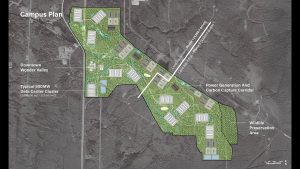
Alberta, Canada, is another beneficiary. Kevin O’Leary, also known as Mr. Wonderful from ABC’s “Shark Tank,” chose Alberta due to the availability of stranded natural gas in large quantities. Instead of bringing power to the data center, O’Leary is bringing data centers to a source of cheap power in Wonder Valley, which is in the Municipal District of Greenview, Alberta.
“Data centers are today’s gold rush,” said O’Leary. “Everything comes from the availability of power in abundance. Stranded natural gas is inexpensive and clean.”
Now under construction, Phase one of Wonder Valley (1.5 GW) will be completed by the end of 2027 at a cost of US$2 billion. Subsequent phases will ramp up to almost 8 GW. Ten massive gas turbines have been purchased for this site.
Creative Powering
It has become clear that there is no single solution that can ease the power challenges faced by data center developers. They need to be flexible and creative to win the AI race.
“You have to figure out what you can do right now to bring power to a new data center,” said Cahill. “Bridging options can be implemented until grid power becomes available or enough onsite power can be added.”
She laid out a rough sequence that begins with searching for plants with excess capacity, then locations near gas fields and gas pipelines. From there, the plan would be to add any available gas turbines or gas engines.
“The challenges are gas supply, air permitting, and turbine and gas availability,” said Cahill.
She noted further alternatives. Solar and gas hybridization, for example, is when solar takes the load during the day, and gas provides power at night. Another way to shorten the time to power is to build an initial simple-cycle gas turbine plant that can be upgraded to a combined-cycle plant when more power is needed or additional turbines become available.
“It is best to have a cookie-cutter design for adding more simple cycle turbines or expanding to combined cycle,” said Cahill.
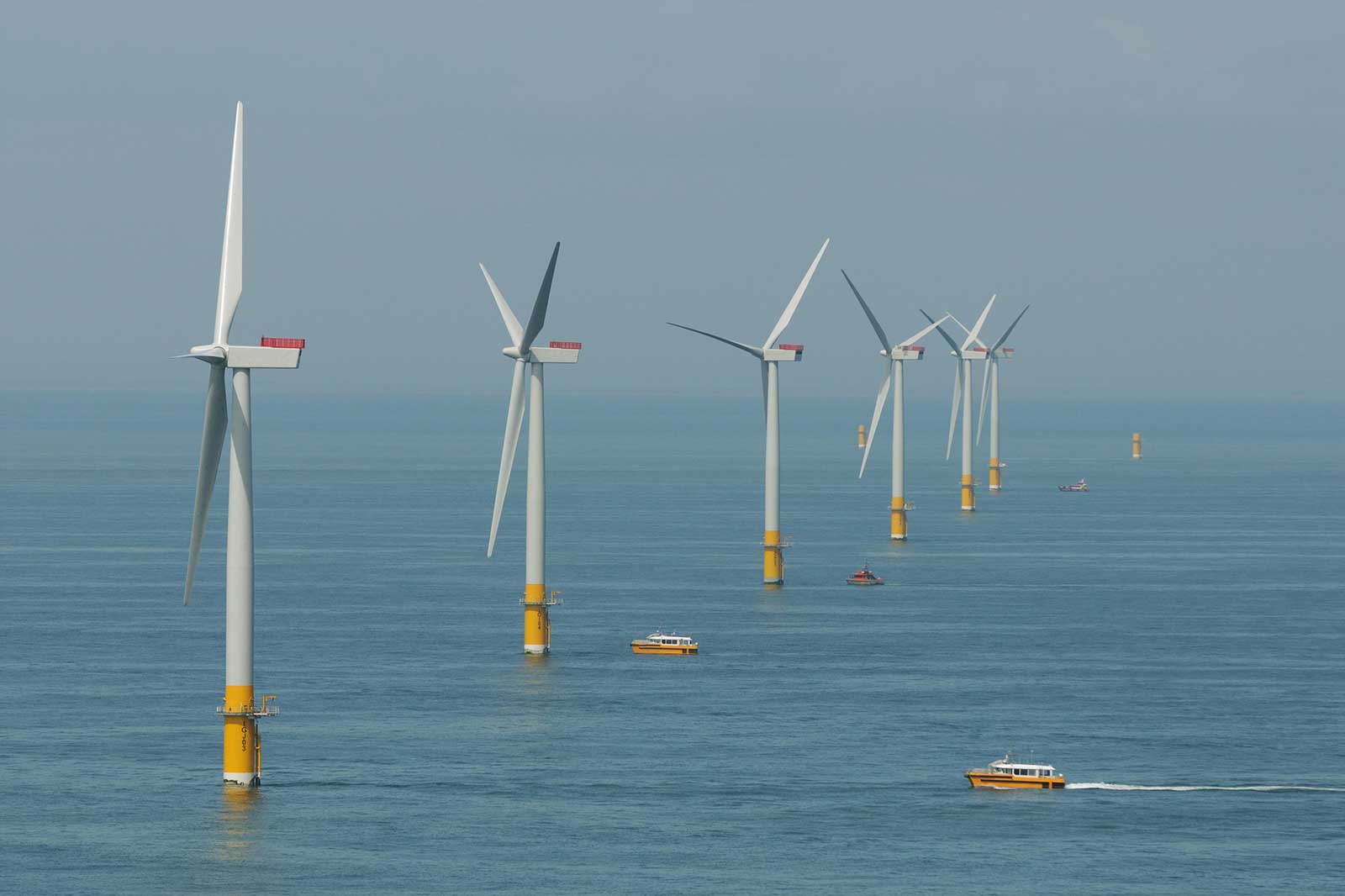
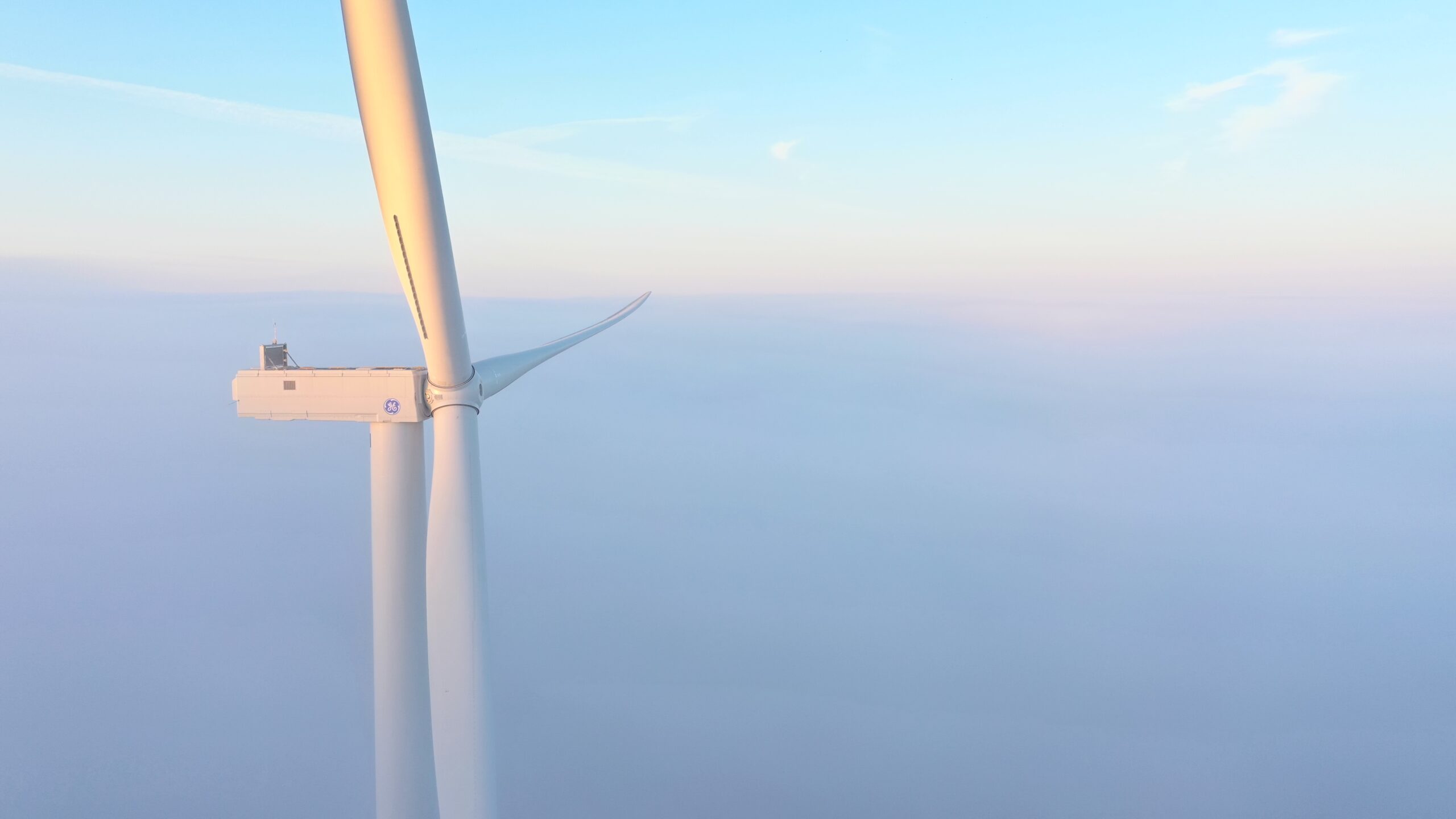
An entirely different approach is being taken by data center developer Applied Digital. It found stranded wind farm assets in North Dakota. More than 400 MW from this site will be fed into an AI factory under construction.
“Major metros are tapped out, grid constrained, and slow to scale,” said Laura Laltrello, chief operating officer at Applied Digital. “The AI race favors builders who can energize fast. Compute demand isn’t going to slow down. The biggest bottleneck is power.”
Late To The Party
Google has partnered with Kairos Power to develop SMRs to operate Google data centers.
“We aim to have an initial SMR deployment by 2030, with further expansion of the site through 2035,” said Lucia Tian, head of clean energy and decarbonization at Google. “Nuclear energy will be more cost-effective and dependable than variable wind and solar.”
SMRs, however, are not a route to immediate power. It might take five years or longer to develop, permit, and open an SMR. More traditional and field-tested nuclear technology, such as the Westinghouse AP1000, could take a decade for a plant to be designed, permitted, and built. Microsoft hopes to eliminate nuclear delays. It has arranged to tap into the Three Mile Island nuclear power station that is scheduled for recommissioning.