EFRC Member Spotlight: Siemens Energy

Address: 4400 North Alafaya Trail
Orlando, FL 32826
Email: [email protected]
Website: www.siemens-energy.com
Year Founded: April 1, 2020
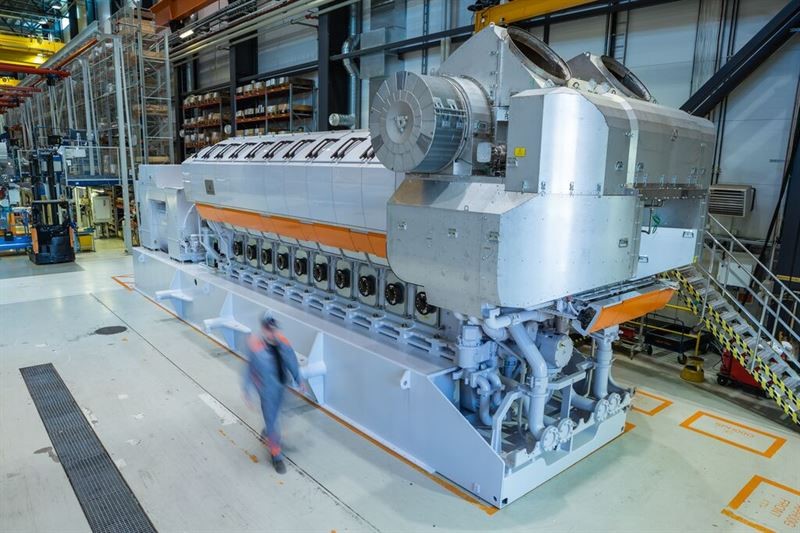
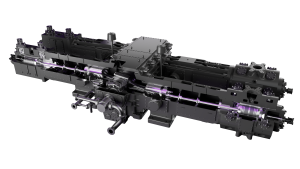
Siemens Energy offers a broad portfolio of compression technologies, ranging from reciprocating and turbo compressors to full-service support for legacy fleets. Building on the engineering heritage of Dresser-Rand and Demag, the company provides both new units and lifecycle services across global markets.
“Siemens Energy’s reciprocating compressors are distinguished by their ability to handle high volumes and low pressures, making them ideally suited for hydrogen, process gas, and refinery applications,” said Dr. Mario Dewald, green hydrogen program manager at Siemens Energy. “Beyond standalone equipment, Siemens Energy delivers integrated hydrogen-production systems that combine electrolyzers, compressors, and digital controls. This provides customers a single-source, optimized solution from generation to storage and usage.”
Siemens Energy’s global network of service and manufacturing centers ensures consistent standards, shared engineering expertise, and rapid field dispatch. Key facilities include Painted Post, New York, and Houston serving the Americas; Naroda, Gujarat, India, supporting the Asia-Pacific region; and Duisburg, Germany, providing services to Europe.
“The Duisburg facility can provide all kinds of service applications as well as final assembly, mechanical run-testing, and training for reciprocating compressors,” said Dewald. “This enables faster delivery and regional support while offering customers a venue for hands-on training and factory acceptance testing. Its harbor-edge location, with direct water and rail access, simplifies logistics and allows shipment of fully assembled compressors to ports in the European waterways system.”
The company’s latest innovations include the MAGNUM Plus valve, which can reduce valve-related power losses by up to 20% depending on the application, and the Infinite Step Control (ISC) system, which allows stepless capacity regulation to match varying process conditions. Together, these advances are intended to enable higher energy efficiency, lower operating costs, and greater flexibility—critical attributes in today’s decarbonizing energy landscape.
“Customers today require compression systems that are flexible, efficient, reliable, and integrated,” said Dewald. “Recent developments highlight both technological and operational expansion. The company is investing in 3D laser scanning technology in all its facilities and customer projects. The technology gathers ‘as is’ data in existing setups and enables more efficient work and a focus on the value added to customer projects, rather than on time-consuming measurement activities. In parallel, Siemens Energy has started a variety of research and development activities to improve the performance of existing products with respect to efficiency, reliability, and flow flexibility as the market demands.”
The Hydrogen Economy
Demand for hydrogen compression is accelerating worldwide, driven by the build-out of electrolyzer capacity to support the energy transition. Reciprocating compressors play a key role in this growth, as proton-exchange-membrane electrolyzers produce hydrogen at atmospheric or very low pressures that must be compressed for storage or downstream use. Siemens Energy has developed both reciprocating compressors (featuring large-bore cylinders up to 48.5 inches [123 cm] in diameter) and turbo compressor technology (capable of delivering the highest flow of 100% hydrogen) to meet these needs.
“To accommodate fluctuating hydrogen production from renewable-powered electrolyzers, Siemens Energy’s reciprocating compressors employ different types of capacity control solutions, such as active valve control, like Infinite Step Control, and active clearance control, like Hydraulic Variable Volume Clearance Pocket technologies,” said Dewald. “The selection of these systems is strongly connected to the specific operational scheme of the compressors, allowing operation from 10 to 100% capacity without energy waste. Efficiency is further enhanced by the MAGNUM Plus valve, translating directly into lower power consumption and operating costs.”
Dewald continued, “To ensure the timely production ramp-up for all new hydrogen plants, the company’s plug-and-play compressor packages, designed for modular installation and quick commissioning, potentially cut field erection time by up to 50%. Prefabricated modules, all weighing less than 25 tons [22 tonnes], can be transported on-site seamlessly without the expense of special oversized transport. What’s more, the interconnecting site work can be completed in a fraction of the time compared to a standard erection situation where components arrive separately at the site and require extensive assembly.”
According to Dewald, Siemens Energy collaborates closely with its electrolyzer division to deliver a one-stop hydrogen solution by integrating compression with electrolysis and digital control for optimal system performance. “Every unit is custom-engineered to customer specifications, ensuring the lowest total cost of ownership over the plant lifecycle,” said Dewald. “If support is needed, one call can activate the resources for the fastest issue resolution possible, no matter where in the world a customer may be located, given the company’s global footprint and super-regional manufacturing and technical competency centers.”
When asked about challenges facing the compression industry today, Dewald cites energy efficiency and reliability, particularly as hydrogen production scales up using renewable electricity. “Especially in green hydrogen plants, every daytime hour not needed for maintenance and every kilowatt of energy saved during compression directly lowers the Levelized Cost of Hydrogen”, said Dewald. “Siemens Energy views efficiency and reliability as key differentiators in making green hydrogen commercially viable without long-term subsidies. Its compressor designs address this imperative through the Infinite Step Control system, which aligns compressor output with variable electrolyzer loads to prevent energy waste. At the same time, Siemens Energy addresses the maintenance aspects of the existing I-FLOW product through remote diagnostic systems and advanced predictive maintenance.
“By leveling capex [capital expenditures] and opex [operating expenditures], the company helps customers increase hydrogen yield per unit of renewable energy consumed,” said Dewald. “As global decarbonization accelerates, efficient compression will remain central to reducing production costs and achieving sustainable growth across industrial and energy markets.”
In collaboration with its electrolyzer division, Siemens Energy is creating a fully integrated offering that unites compression and hydrogen production technologies under one engineering and service umbrella. “With project customized service programs, and considering the parts and service businesses, the company is optimizing the operation of our customers,” said Dewald. “This synergy will be demonstrated in multiple European green-hydrogen installations, where modular, plug-and-play compressor packages can cut installation and commissioning time by half, depending on the site conditions. These developments strengthen the company’s position as a provider of efficient, flexible, and integrated compression solutions for conventional and emerging energy markets.”
The Value of Collaboration
According to Dewald, participation in the European Forum for Reciprocating Compression (EFRC) provides Siemens Energy with a collaborative platform for advancing reciprocating compressor technology. “Through the EFRC’s technical committees and research partnerships, Siemens Energy contributes to and benefits from joint studies with universities and peer companies, gaining insight into emerging design methods and performance trends. The forum fosters an open exchange of ideas, challenging participants to refine their solutions and benchmark best practices,” said Dewald. “Beyond technical collaboration, EFRC events offer valuable opportunities for direct engagement with end users, enabling Siemens Energy to align its development roadmap with real-world operational needs. The combination of academic research, industry dialogue, and customer feedback supports our ongoing innovation in energy-efficient, hydrogen-ready compression systems. It reinforces its commitment to collective progress across the gas compression community.”