Executive Outlook: Maas Energy Works
A Conversation With Nathan Nisly, Director Of Product Engineering At Maas Energy Works
 Maas Energy Works (MEW) develops, owns, and operates dairy-based anaerobic digester and renewable natural gas (RNG) projects across the United States. MEW has been increasingly insourcing its gas cleanup and compression systems.
What key lessons have emerged over the past year? How are you adapting systems for colder climates like South Dakota and harsher environments like West Texas?
The biggest lesson has been that performance comes from continuously refining the small details that drive efficiency and uptime.
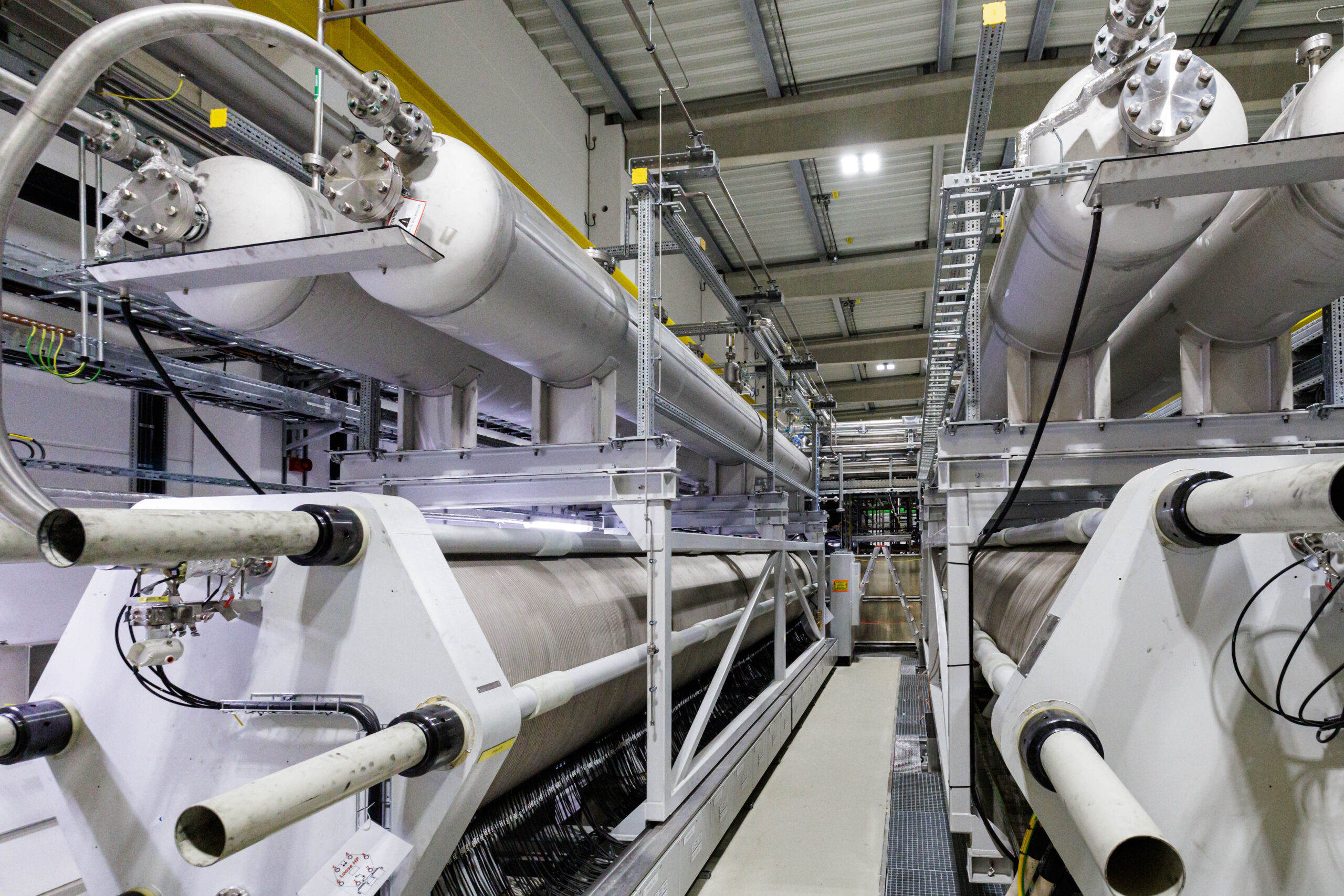
As we’ve brought more of our cleanup and compression systems in-house, we’ve focused heavily on engineering fundamentals. That includes getting the anchoring schemes right for rotating equipment to reduce vibration and wear, dialing in heat-tracing and condensate-removal systems so they function consistently in the field, and selecting and integrating the right sensor packages for accurate, reliable data. None of these elements is new or groundbreaking on its own, but taken together, they are what allow a site to run smoothly with minimal downtime.
A good example is how we’ve refined the way sensors are connected to our pipelines. We’ve moved toward integrated block-and-bleed valve configurations rather than more complex, multivalve Christmas tree setups. That kind of simplification and standardization is common in the broader gas industry, but biogas systems are still catching up. More broadly, we’re continuing to adopt the design, redundancy, and reliability standards that are customary in the oil and gas industry.
As we expand into new regions, those lessons are being applied in very different operating environments. In colder climates like South Dakota, the focus is on insulation, heat tracing, and heaters to ensure systems remain operable in winter conditions. We’re also incorporating more enclosed buildings to better protect equipment and maintain stable operating conditions.
In West Texas, the challenges shift to heat, dust, and high winds. There, we’ve made design changes to the lagoon covers to improve durability in high-wind conditions. We’re also implementing weather-monitoring and operational strategies that allow us to respond proactively. For example, when high-wind events are forecast, we can adjust operations, including drawing down covers in advance, to reduce stress on the system.
Across all these environments, the underlying principle is the same: reliable performance results from executing a large number of small engineering details well.
South Dakota and West Texas were identified as key growth markets. What does deployment look like today, and is development tracking with your projections? How is MEW maintaining uptime across a growing, distributed asset base?
We’ve made steady progress in both regions, though the scale today is still relatively modest. In West Texas, we’ve deployed two full-gas, self-built upgrading systems, with another project in development. In South Dakota, we have one system online and several more in the pipeline. There is real growth, but it’s not at a massive scale yet. That pace is largely tied to broader market conditions affecting the entire industry. While that has tempered the pace of new construction, it’s also had a positive effect. It’s forced a more disciplined approach — more rigorous financial modeling, more fully developed construction plans, and ultimately better-positioned projects as we move forward.
As our systems have expanded across multiple states, we’ve also evolved how we manage them. One of the more important changes has been the introduction of a hybrid site leadership role. We bring on a site supervisor during construction who then transitions into a full-time operator once the site is online. That continuity matters. The person operating the facility is the same person who helped build it, which leads to a deeper understanding of the system and stronger long-term performance. We often say, “We have good jobs for good people.” And we really have good people taking charge of our operations.
We’ve paired that on-site ownership with a robust remote support structure. Our teams have access to real-time monitoring, cameras, Starlink connectivity, and a full suite of sensors and reporting tools. In addition, we’re rolling out enhanced safety and environmental alert systems that notify staff of anything that could impact performance — weather events, equipment issues, or potential gas system concerns.
It’s a hybrid model featuring on-the-ground operators supported by centralized technical oversight. That combination allows us to maintain strong performance across a growing and increasingly distributed asset base.
Smaller dairy projects have historically been difficult to pencil. Have there been any breakthroughs that have made these systems more viable?
The honest answer is not yet. At this point, smaller-scale projects remain challenging. The core issue is that, as a fully integrated company, we operate with a very specific set of equipment and performance requirements. That includes defined control systems, drives, monitoring equipment, cameras, safety, and flow measurement. These standards allow us to deliver the level of reliability and consistency we expect — but they also don’t scale down easily.
As a result, smaller projects end up carrying much of the same complexity and cost structure as larger ones. We continue to look for ways to make them work, but today they remain cost constrained.
Project economics ultimately come down to three levers: revenue, cost, and incentives. For a smaller project to be viable, one of those must move in a meaningful way. That could mean stronger market pricing, more efficient engineering that reduces capital cost, or policy support in the form of incentives or grants. The location also matters a lot. The economics are better when we can build near existing personnel and infrastructure.
In markets like California, there has been discussion around expanding access to smaller dairies, but that only works if there is sufficient government incentive. Without that, the economics are difficult to justify on small dairies (under 2000 milk cows).
So, while it is absolutely possible to design systems for smaller projects, the reality today is that they are still constrained. It’s not a question of whether it can be done — it’s whether it can be done economically.
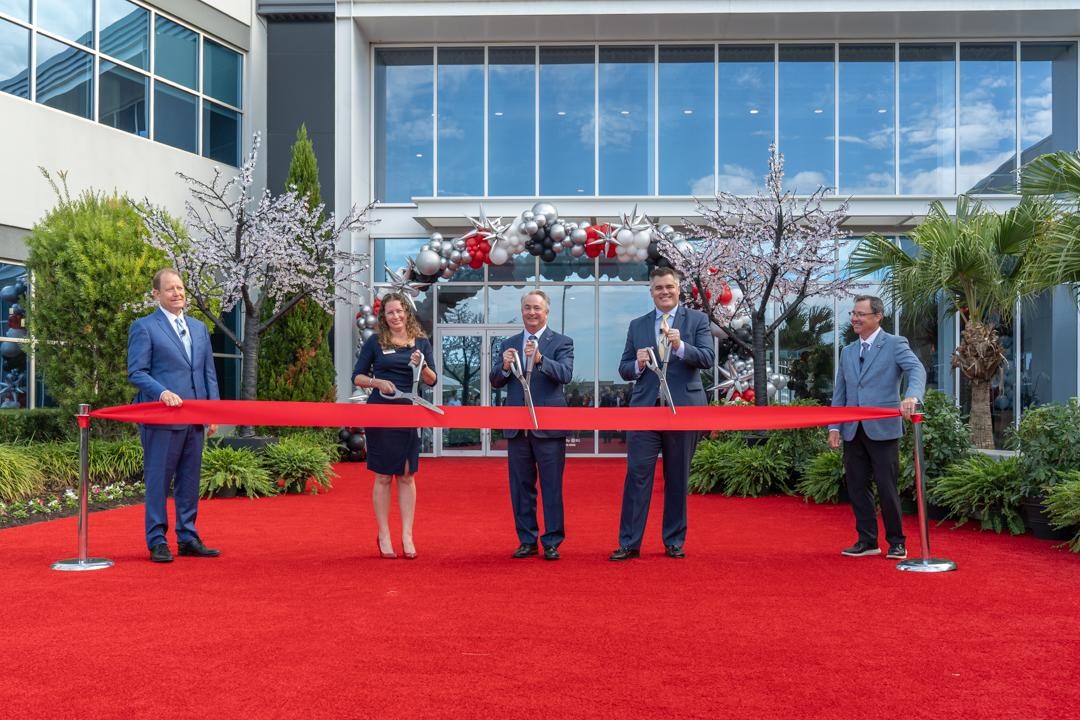
At the end of last year, MEW launched a new RNG facility at Couco Creek Dairy in Turlock, California. On December 30, 2025, Pacific Gas and Electric (PG&E’s) injection facilities completed readiness testing, and Blue Sky Dairy began delivering RNG for injection. On December 31, 2025, Couco Creek finalized its gas-quality test. After PG&E’s approval, on-site RNG began flowing the same day. The site utilizes a unique hub-and-spoke configuration that combines on-site RNG production from livestock waste with a “virtual pipeline” that accepts trucked-in gas from neighboring dairies. This approach expands the reach of California’s dairy-based RNG market by allowing facilities without direct pipeline access to contribute to carbon-negative fuel supplies. Projects like Couco Creek highlight a shift toward flexible infrastructure. Is affordability being driven more by standardized modules or by shared infrastructure models such as hub-and-spoke?
Standardization is important, and we are continuing to move toward more modular, skidded designs across our systems. That helps with repeatability, efficiency, and long-term scalability in how we design and build projects.
That said, the biggest driver of affordability is shared infrastructure.
Projects like Couco Creek show what becomes possible when you rethink the model. By allowing multiple dairies to share key components — whether that is an offload point, an injection point, a gathering pipeline, an upgrading system, or other core infrastructure — you can materially improve project economics. Both on-site production and trucked delivery help unlock opportunities for dairies that might otherwise be too remote or too costly to connect on a standalone basis.
Natural gas pipeline interconnection, in particular, remains one of the biggest hurdles in this industry. It is expensive, time-intensive, and often one of the hardest pieces of a project to develop. When you can share interconnection infrastructure across multiple projects or tie multiple dairies into a common system, the economics improve substantially.
That is why models like hub-and-spoke are so attractive in the right setting. Where dairies are located close enough together, shared infrastructure can reduce cost and expand the number of projects that are commercially viable. So, while modularization absolutely helps, the bigger step change comes from designing systems that work together rather than in isolation.
MEW has expanded into carbon-negative hydrogen and carbon dioxide (CO2). What does the ideal hydrogen customer look like, and how are your CO2 initiatives progressing?
For hydrogen, the ideal customer is straightforward: long-term, consistent offtake at a strong price. That requires someone to build not just the fueling stations but also to find or develop a vehicle fleet. We have good relationships with companies working to do those things, but the volume of fuel there is tiny. Today, most demand is emerging in heavy-duty mobility via compressed natural gas vehicle fueling. We remain open to industrial applications as well.
On the CO2 side, our capture and liquefaction facility in Merced, California, is under development and expected to come online within the next year.
With rising demand for firm, green power from sectors like data centers, are you seeing increased demand for RNG? And will hub models like Couco Creek become the standard?
There’s definitely a lot of conversation around data centers and energy demand, but we haven’t yet seen that translate into significant demand for dairy RNG.
Most buyers today are still focused on cost. Because artificial intelligence [AI] uses so much energy, they want the cheapest power and the cheapest gas possible. If they’re looking for renewable gas at all (which few are), they’ll typically go to the lowest-cost option first — often landfill gas — before stepping up to something like dairy RNG, which carries a premium because of its carbon-negative attributes.
As for infrastructure, we don’t see a one-size-fits-all model emerging. Direct pipeline injection is always the simplest path when it’s available. But in many cases, it’s not, and that’s where models like Couco Creek become lucrative.
The reality is, we’ll continue to use whatever combination of approaches makes the most sense for a given project. Whether that’s direct injection, virtual pipelines, or hub-and-spoke systems, the goal is always the same: build the most efficient, reliable solution possible.