IRS Ends Four-Year Wait On 45Z Clean Fuel Credit Guidance
New Rules For The Clean Fuel Production Tax Credit Provide Much Needed Clarity For The RNG Industry

The Internal Revenue Service (IRS), working with the US Department of the Treasury (Treasury), issued Notice 2026-53 on September 8, 2026, providing additional guidance on the Section 45Z Clean Fuel Production Credit (45Z). The notice builds on proposed regulations Treasury published on February 4, 2026, and follows the US Department of Agriculture’s (USDA) finalized rules on regenerative agriculture practices, issued June 29, 2026. Congress created 45Z under the Inflation Reduction Act (IRA) of 2022, and the credit applies to qualifying fuel produced after December 31, 2024. Legislation enacted in 2025 extended the credit’s availability through 2029, two years beyond its original 2027 end date.
“Today’s guidance helps America’s farmers, ranchers, and fuel producers access growing opportunities in the domestic biofuels market,” said Frank Bisignano, IRS commissioner.
The credit pays 20 cents per gallon for fuel that cuts life-cycle greenhouse gas emissions by at least 50% compared with petroleum, scaling up to US$1 per gallon for fuel with the steepest emissions reductions, with carbon intensity measured under the 45ZCF-GREET model. To qualify, feedstocks must originate in the United States, Mexico, or Canada, and producers must be American-controlled. Notice 2026-53 excludes indirect land-use change from the emissions calculation, prohibits negative emissions rates except for manure-derived fuel, and adds separate 2026 emissions-rate entries for dairy manure and swine manure feedstocks. It also lets producers factor farm-specific manure-management practices and USDA-aligned regenerative agriculture practices into their carbon-intensity scores through the Feedstock Carbon Intensity Calculator, and it grants transition relief for 2025 and 2026 production on nutrient-budget requirements. The IRS said it expects to add poultry and beef manure feedstocks to the GREET model later in 2026.
A Four-Year Wait Ends For Biogas And RNG Producers
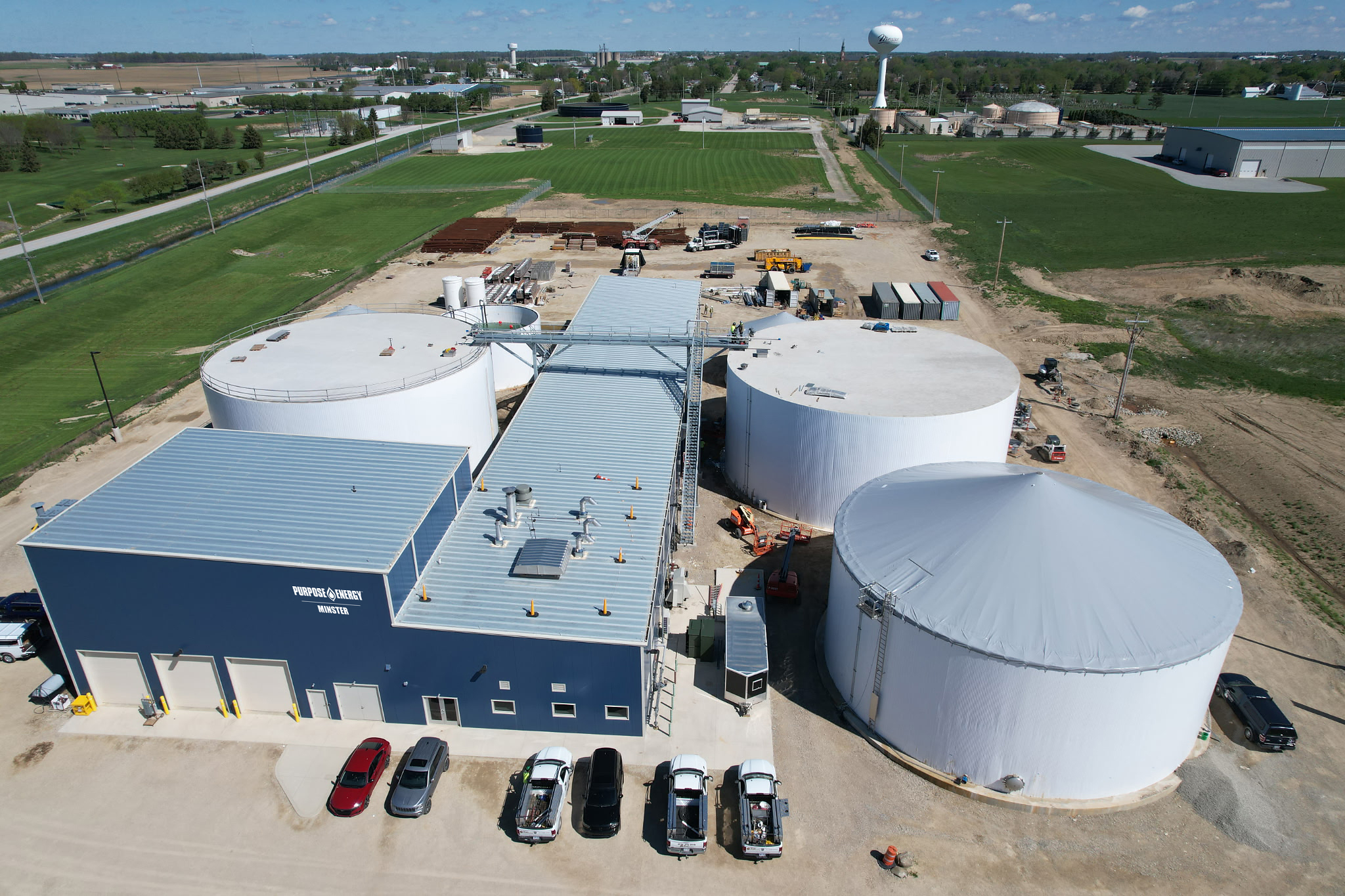
For the renewable natural gas (RNG) industry, Notice 2026-53 clarifies how the 45Z credit applies to fuel made from manure, food waste, and other organic feedstocks. “The wait is over. Since Congress created 45Z four years ago, the biogas industry has been waiting for the certainty needed to fully put this tax credit to work,” said Patrick Serfass, executive director of the American Biogas Council (ABC). “Billions of dollars of potential investment have been sidelined in recent years while companies waited to understand how 45Z would apply.”
“America produces enormous quantities of manure, food waste and other organic materials every day,” said Serfass. “Instead of wasting those resources, biogas systems can recycle them into domestic renewable energy while supporting farms, rural communities and American jobs. Today’s action gives our industry an important new tool to build more of those projects.” The ABC said many biogas producers had held off claiming 45Z entirely until they saw how the credit would treat their feedstocks, leaving the credit’s value unrealized even as facilities kept producing fuel.
Not every RNG producer waited on the sideline. Opal Fuels LLC, a vertically integrated RNG producer, signed a US$100 million master agreement in April 2026 to begin monetizing 45Z credits under Treasury’s proposed rules, with its first closing expected that same quarter. “These proceeds will contribute to our overall corporate liquidity for future growth investments in both new RNG projects and fueling infrastructure that will accelerate broader fleet adoption of RNG and CNG, one of the primary solutions available at scale today that can meaningfully improve economics in heavy-duty transportation,” said Adam Comora, co-chief executive officer (co-CEO) of Opal Fuels. That deal shows how, even before the September 8 notice, producers with proposed-rule guidance in hand were starting to structure 45Z into their financing. Now, with dairy- and swine-manure emissions rates finalized, the ABC expects a broader set of biogas and RNG developers to follow.
The Future Of RNG
The IRS notice leaves some pieces unfinished. Emissions rates for poultry and beef manure, two feedstocks the biogas industry uses widely, are not due until later in 2026, and the Treasury’s February proposed regulations have not yet been finalized into permanent rules. RNG capacity has grown by roughly 35% since 2023, according to industry tracking, even as transportation, still more than half of current RNG use, remains the dominant application. Groups including the ABC have argued that expanding demand into power generation and other commercial uses will matter as much to the market’s long-term trajectory as the tax credit itself.
With 45Z now extended through 2029 and manure-based feedstocks finally scored under the GREET model, the more immediate test is whether the billions of dollars in sidelined investment the ABC has described actually materializes into new digesters, upgrading equipment, and pipeline interconnections, or whether producers wait again for the remaining feedstock categories and final rules before committing capital.