Strategic Opportunities For Ammonia Cracking In The Global Hydrogen Economy
(Image Created Using Adobe Firefly)
By Priyan Mistry
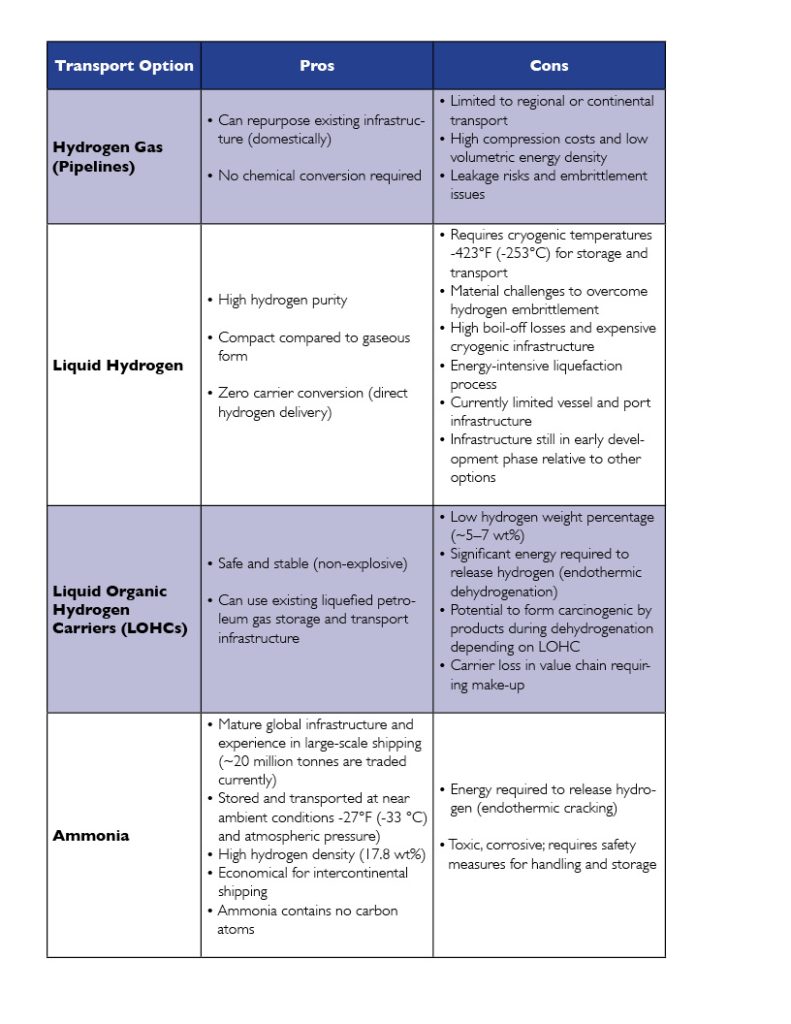
Hydrogen is essential to global decarbonization efforts, particularly within sectors challenging to electrify, such as heavy transport, industrial heating, power generation, and chemical manufacturing. However, transporting hydrogen across international borders presents significant technical and economic challenges. Among potential hydrogen carriers, including liquid organic hydrogen carriers (LOHCs), liquid hydrogen, and compressed hydrogen, ammonia emerges as a uniquely advantageous option due to its mature global infrastructure, high hydrogen density, and scalability.
Ammonia already enjoys extensive global trade, leveraging established logistics and handling systems. Its hydrogen content of approximately 17.8% by weight allows substantially greater storage per unit volume compared to liquid hydrogen, reducing logistical complexity. Additionally, ammonia’s modest refrigeration requirement at -27°F (-33°C) and atmospheric pressure represents a significantly lower energy burden than liquid hydrogen’s cryogenic storage requirement of -423°F (-253°C).
Comparative Technical Analysis Of Hydrogen Carriers
Ammonia offers distinct operational and economic advantages compared to other hydrogen carriers. LOHC technologies involve chemically binding hydrogen to organic compounds, such as toluene, for safe transportation. While they can use existing storage and transport infrastructure, the additional processes of hydrogenation and dehydrogenation introduce notable efficiency losses and substantial infrastructure demands for carrier recycling. Similarly, liquid hydrogen provides a pure hydrogen product but requires energy-intensive liquefaction, specialised infrastructure, and substantial energy loss due to boil-off during storage and transport.
Driving Sustainability And Decarbonization
Ammonia cracking is strategically positioned to accelerate global decarbonisation by enabling effective transport and utilisation of renewable energy and low-carbon hydrogen. With global renewable energy capacities growing rapidly, ammonia provides a viable method for converting intermittent renewable electricity into stable, transportable chemical energy.
Significant renewable energy commitments worldwide, exemplified by Europe’s ambitious renewable energy directives and China’s expansive Power-to-X initiatives, underline a widespread shift towards cleaner energy solutions. Countries with limited domestic renewable energy resources, notably Japan, South Korea, and various European nations, can substantially benefit from importing low carbon ammonia, subsequently cracking it domestically into clean hydrogen, aligning their national energy policies with global climate objectives.
Forecasts from S&P Global indicate that approximately a quarter of global low carbon ammonia production by 2050 will be used specifically as hydrogen carriers. Importing renewable-derived ammonia and cracking it domestically can substantially reduce hydrogen production costs compared to purely domestic hydrogen generation, encouraging widespread adoption within sustainable energy strategies.
Detailed Technical Insights Into Ammonia Cracking
Ammonia cracking involves catalytically decomposing ammonia into hydrogen and nitrogen, typically at operational temperatures ranging from 1112°F (600°C) to 1652°F (900°C). Catalyst efficiency is crucial in this process, predominantly employing nickel or ruthenium catalysts, which ensure high conversion rates and minimize energy input.
Recent advancements in catalyst technology have markedly improved ammonia cracking efficiency. Innovations include catalysts with enhanced thermal stability, superior catalytic activity, and greater resistance to poisoning by contaminants, significantly prolonging catalyst lifespans and reducing operational maintenance demands. Advanced reactor designs such as tubular and plate reactors are optimised for better thermal management, lower pressure drops, and improved energy efficiency.
Further improvements are realised through heat integration strategies, where recovered heat from ammonia cracking or adjacent processes is utilised to reduce overall energy consumption and environmental impact. Renewable electricity integration directly into ammonia cracking processes also enhances sustainability, enabling the potential for carbon-neutral hydrogen production.
Enhancing Energy Security And Infrastructure Resilience
Energy security is increasingly critical worldwide, emphasizing the importance of diversified energy sourcing and resilient infrastructure. Ammonia cracking significantly contributes to energy security by facilitating diversified hydrogen imports from geopolitically stable regions, mitigating risks associated with reliance on single-source energy suppliers.
Ammonia cracking facilities can be either centralized or decentralized. Centralized units, typically integrated within import terminals or industrial clusters, efficiently supply large-scale hydrogen demand in sectors like steelmaking, glass production, chemicals, and power generation, maximising economies of scale and ensuring continuous hydrogen availability.
Decentralized ammonia cracking systems, located close to specific end-users such as hydrogen refuelling stations for transport or remote industrial facilities, reduce dependence on extensive hydrogen distribution infrastructure. These units enhance local energy resilience and flexibility, particularly beneficial during supply disruptions or periods of heightened demand. However, deploying decentralized crackers may require ammonia transport through populated areas, raising safety and public perception concerns.
Ammonia can also serve effectively as a seasonal energy storage medium, being economically stored during periods of excess renewable generation and cracked back into hydrogen during periods of peak demand or low renewable energy output, thus supporting stable and dispatchable energy availability and reinforcing grid stability.
Regulatory Dynamics And Commercial Readiness
Evolving global regulatory environments increasingly support low-carbon hydrogen solutions. Ammonia-derived hydrogen aligns well with regulatory frameworks such as South Korea’s Clean Hydrogen Certification Scheme and hydrogen authenticity program, providing verified low-carbon hydrogen eligibility for hydrogen auctions. Policies such as the EU Renewable Energy Directive and emerging global certification standards explicitly favour ammonia-derived hydrogen due to its transparent low-carbon credentials.
In Europe, stringent carbon trading and renewable energy policies align seamlessly with ammonia cracking due to the clearly verified low-carbon origin of the resulting hydrogen. Asian markets, notably South Korea and Japan, strongly back ammonia-based hydrogen through targeted policy incentives and regulatory support, significantly bolstering market confidence and adoption rates.
Globally, ammonia cracking technology is swiftly advancing from pilot initiatives to commercial-scale projects. International ammonia trade agreements and major project developments across regions such as the Middle East, North America, Africa, and Asia reflect ammonia cracking’s readiness for widespread commercial implementation.

(Image Created Using Adobe Firefly)
Strategic Role Of Ammonia Cracking
Ammonia cracking occupies a central strategic position in the global hydrogen economy, providing scalable, economically compelling, and resilient pathways essential for achieving decarbonization, energy security, and regulatory compliance objectives. Leveraging established global infrastructure, ammonia cracking surpasses other hydrogen carriers in practicality, storage efficiency, and economic viability.
As global regulatory frameworks continue evolving and renewable energy capacities expand further, ammonia cracking will increasingly become the cornerstone of international hydrogen trade. For industry stakeholders, ammonia cracking represents a critical strategic technology, facilitating accelerated global decarbonization, strengthening energy security, and aligning seamlessly with rigorous international standards.
About The Author
Priyan Mistry is the business development manager of Ammonia Cracking Technology & Catalysts at Johnson Matthey
[1] IEA Global Hydrogen Review 2024
[2] International Energy Agency (IEA), Global Hydrogen Review 2022