The AI Boom Is Here To Stay
The annual Data Center World (DCW) conference in Washington, DC, continues to go from strength to strength. Over the past few years, it has grown significantly — from around 2000 attendees and 200 exhibitors to more than 6500 and 500, respectively. This rapid expansion is largely driven by massive investment in artificial intelligence (AI). According to analyst firm Omdia, the trend shows no signs of slowing.
A year ago, Omdia made several predictions for 2030
- Nearly every enterprise will be using multiple AI applications.
- AI will drive more than 50% of installed power generation capacity.
- More than 35 GW of that power will be self-generated.
- The 1 MW computer rack will remain little more than an ambition.
“All of these predictions are fully on track, but it now looks like the 1 MW rack will happen,” said Vlad Galabov, an analyst at Omdia. “Some thought our forecasts last year looked overly ambitious, but we have recently revised all our AI predictions upwards.”
Galabov tackled the question of whether AI is a bubble about to burst or a long-term trend. The naysayers point to the stock price of certain AI companies. Their changeable nature means that a canceled or postponed data center project or a disappointing earnings report from an AI chipmaker like Nvidia can cause stock prices to plummet. Component shortages such as transformers, gas engines, gas turbines, computer chips, and memory are another potential banana peel that could trip up this surging market.
Galabov isn’t convinced. He believes solid market fundamentals are a better indicator than stock price volatility. He pointed to strong demand for AI applications and services, emerging new use cases, sales of AI chips, and continued heavy investment as proof of AI data centers. “The pace of data center investment is accelerating, and we expect that to continue for some time to come,” said Galabov.
The amount spent on AI data centers far exceeds the revenue from AI services. However, AI is generating close to US$20 billion per month. By 2030, the gap will narrow, and perhaps even cross. By then, hundreds of GW-class data centers will be operating. That foundation is likely to fuel the AI boom well into the next decade. “The likes of OpenAI, Oracle, and Amazon can’t get enough power to their data centers as there is so much demand,” said Galabov. “The amount of compute power being consumed by AI data centers and applications has increased by two orders of magnitude in the last six months.”
Each of those data centers represents additional power generation. Investment in new power generation is inevitable given that half of all AI data center spending goes into power-hungry graphics processing units (GPUs).
Despite the millions of GPUs shipped over the last two years (which typically leads to economies of scale and prices for new technology to drop), demand is so high that prices are increasing. “The race is on to build AI factories to generate a future revenue boom,” said Galabov. “The power generation and electrical supply chain needs to adapt to the speed of the market.”
AI Boom Growth Drivers
Hyperscalers such as Amazon, Microsoft, Alphabet-owned Google Cloud, Oracle, and Meta Platforms, as well as chipmaker Nvidia, are the key drivers of AI data construction and investment. They have disrupted power generation, transmission, and distribution supply chains. Existing systems, processes, and practices are breaking down under the strain. The hyperscalers are not letting up.
Oracle is steadily adding more big AI data centers, and each requires power. It is often unable to obtain that power in the quantity desired from the grid. At many sites, it is adding battery energy storage systems (BESS) to provide additional power when needed and to also prevent some of the instability problems that AI data centers can cause to electricity networks.
“Gas turbine power plants and power grids can’t cope with the massive power swings produced from AI data centers that can happen several times a second,” said Ram Nagappan, vice president of AI infrastructure at Oracle Cloud Infrastructure. “BESS can act as a buffer to dampen these power swings, and this is emerging as a new requirement for AI data centers.”
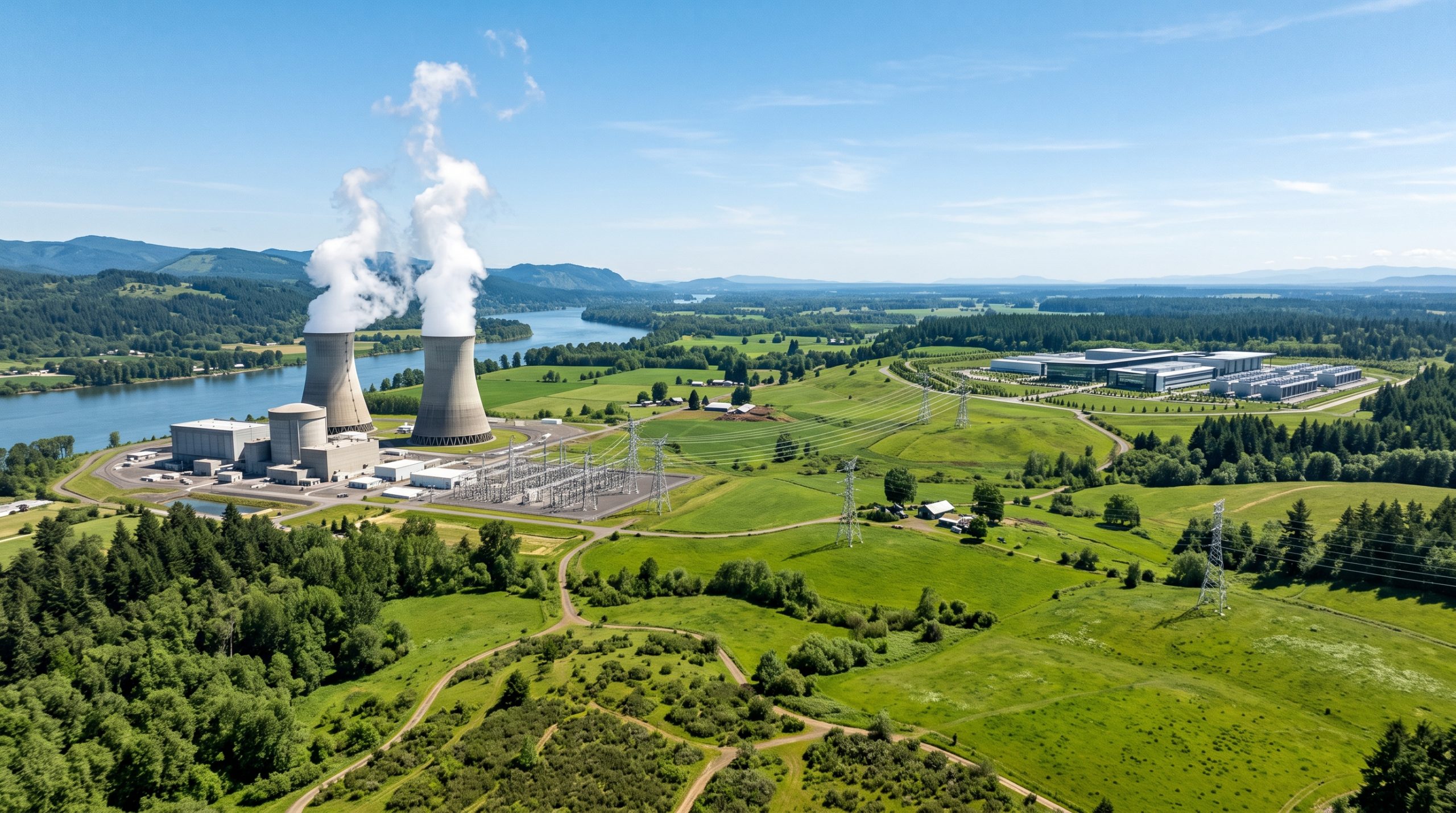
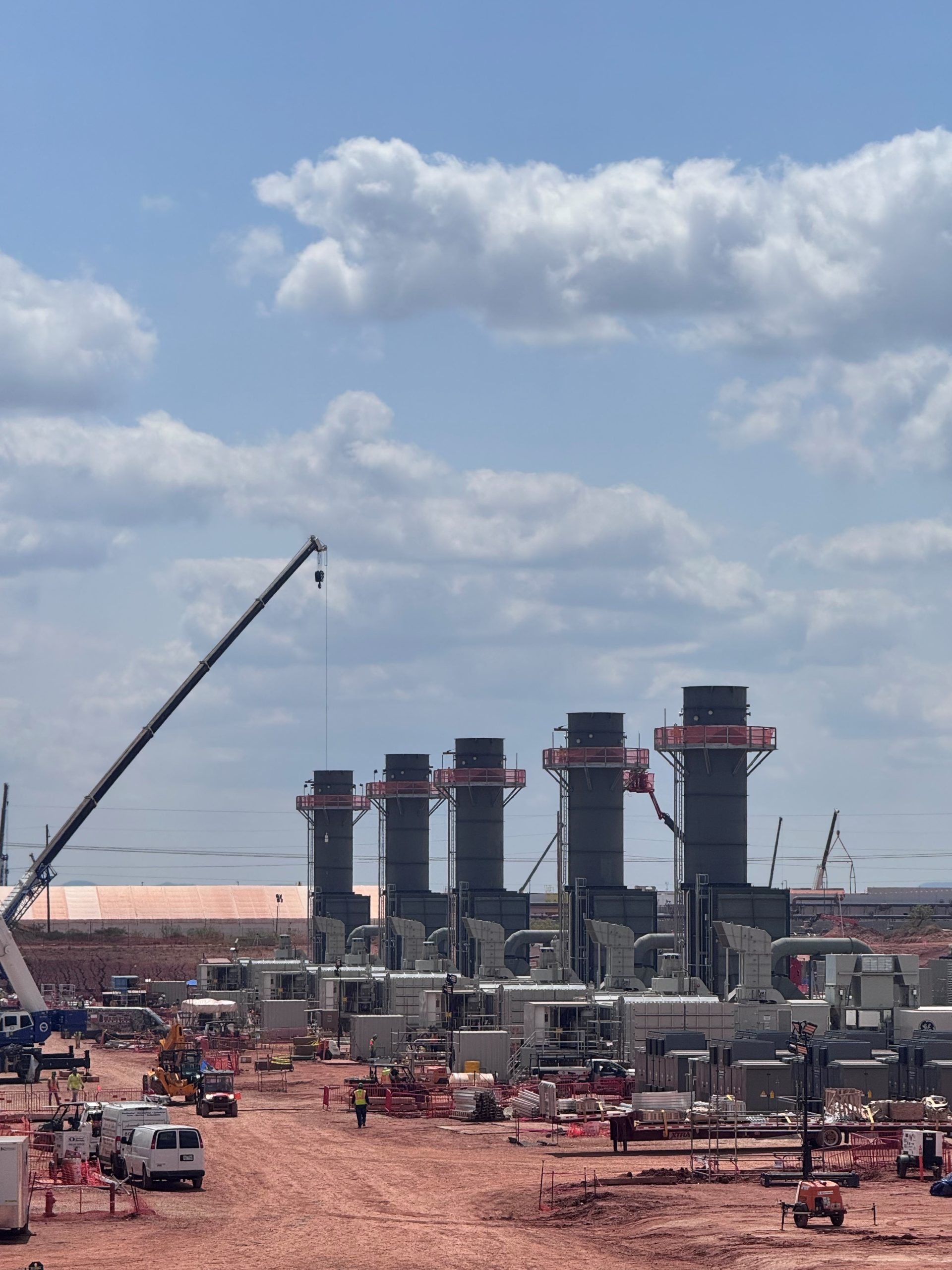
Many developers have decided to build large power plants beside their AI data centers. This is known as behind-the-meter (BTM) or on-site power.
“While we’re installing on-site generation, we should be thinking about how to get that on-site generation connected to the grid someday in the future,” said Sean James, a data center engineer at Nvidia. “We need to be working with utilities to open up more opportunities for power.”
Grid Versus Onsite Power
Gene Alessandrini, senior vice president of energy and location strategy at data center operator CyrusOne, believes that centers building their own power plants is not the smartest idea. “Operating power plants is a completely different business and is one [that] hyperscalers and developers have no experience in,” he said.
Data center developer Aligned Data Centers is also being forced into the power plant business. It has 88 data center buildings under construction right now, and power availability is at a premium.
“Securing utility baseload is the challenge,” said Lawson-Shanks. “Nobody wants to build onsite generation for their facilities, but we are being forced to do so.”
The challenge there is equipment backlogs. He noted that the abundance of natural gas in the US is not matched by the supply of gas turbines and reciprocating engines. “Turbine blades, for example, are a major bottleneck,” said Lawon-Shanks.
The company gets around the shortage of components like transformers by buying equipment in bulk two and a half years in advance. It does the same with land, purchasing plots around the country that could one day prove to be a good site for a facility. Beyond land availability, the company feels a far greater constraint on data center expansion from the electricity supply.
“There is huge growth in data center expansion now compared to ten years ago,” said Phill-Lawson-Shanks, the company’s chief executive officer. “We now look for land where there is stranded power.”