Airbus Low-Emission Aircraft To Enter Service In 2030
Airbus’ Next-Generation Single-Aisle Aircraft Has Expected 20% To 30% Increase In Fuel Efficiency Compared With The Current Generation, Capability To Fly With Up To 100% With Sustainable Aviation Fuel
During the 2025 Airbus Summit, Airbus provided an update on its roadmap to pioneer the future of commercial aviation. The company outlined potential technology bricks to prepare a next-generation single-aisle aircraft that could enter service in the second half of the 2030s, as well as its revised roadmap to mature the technologies associated with hydrogen-powered flight.
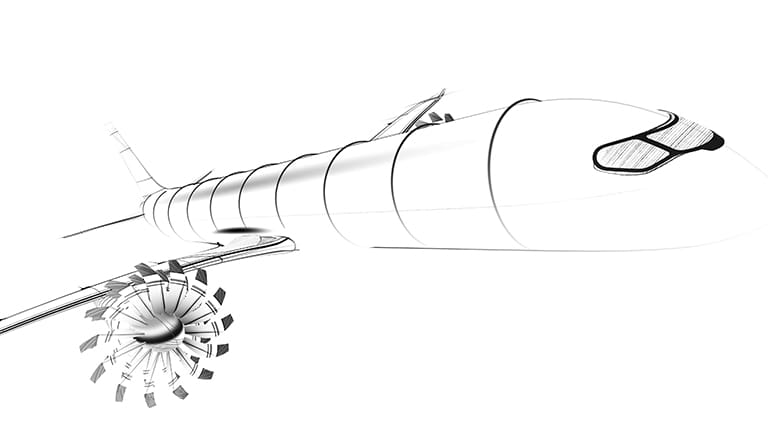
Airbus provided more details regarding the key technology building blocks that could enable the entry into service of a next-generation single-aisle aircraft with an expected 20% to 30% increase in fuel efficiency compared with the current generation, as well as the capability to fly with up to 100% sustainable aviation fuel (SAF). Airbus also unveiled new design concepts that showcase the different configurations being studied for this future aircraft, highlighting the various potential solutions that are being explored to achieve this major leap forward in aircraft efficiency, and support the aviation sector’s roadmap towards net zero emissions in 2050.
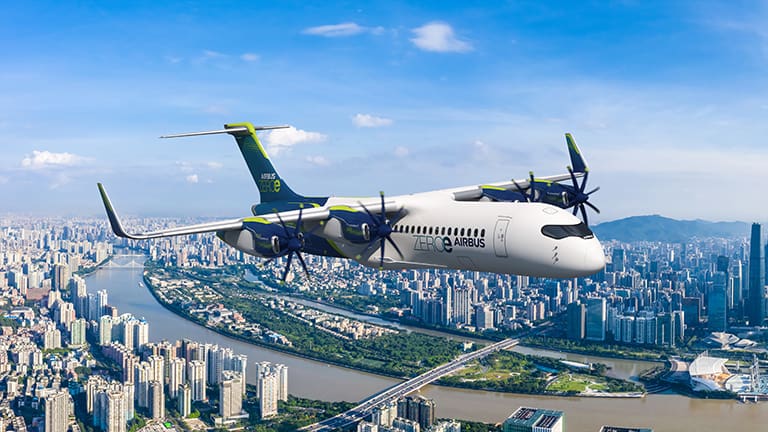
(Image courtesy of Airbus)
Technologies include more efficient engines, including disruptive open fan designs; long foldable wings allowing for significant aerodynamic gains; next-generation batteries to enable hybrid architectures where electricity is increasingly used to support propulsive and non-propulsive functions aboard the aircraft’ and lightweight materials and integrated systems for a connected aircraft.
“Every second, an Airbus aircraft takes off – connecting people, cargo and business around the world,” said Bruno Fichefeux, Airbus head of future programs. “We have the most advanced aircraft portfolio in the market and the A321XLR is at the very forefront of today’s single-aisle aircraft technology. Now we are taking the best of what we’ve done and preparing another jump to make our single-aisle aircraft even better and pioneer the future of flight, when the time is right.”
“Airbus teams are working relentlessly towards the key decisions that will ultimately finalize the choices of the aircraft’s engine type, wing design and additional innovations once their maturity is demonstrated,” said Airbus head of research and technology Karim Mokaddem. “Each of these technology building blocks will play a key role in enabling a new generation of commercial aircraft that will deliver step change improvements in all domains for efficiency and productivity and bring a considerable contribution to the decarbonization of air travel in the decades to come.”