Engineering The Energy Backbone
Infrastructure Limits And Emerging Behind-The-Meter Architectures

Time-to-power demands from data centers and manufacturing expansion are placing intense pressure on the transmission grid. In response, utilities are being forced to allow more behind-the-meter (BTM) onsite power generation.
Take the case of Black Hills Energy, an electric and gas utility serving 1.35 million customers in Arkansas, Colorado, Iowa, Kansas, Montana, Nebraska, South Dakota, and Wyoming.
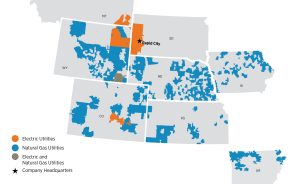
Based in Rapid City, South Dakota, Black Hills Energy serves 1.37 million natural gas and electric utility customers in eight states.
“We are concerned about obtaining sufficient natural gas supply to satisfy demand from data center developers and other customers,” said Derek Silbaugh, director of generation engineering and environmental services at Black Hills Energy. “As a utility, we need to look at the big picture and see if there are enough pipelines, compressors, and supporting infrastructure to supply all potential users.”
While data centers seek to draw power from the grid or generate on-site power for their own needs, Black Hills Energy views it as a two-way street. With the large loads that go far beyond a standard interconnect, such as 100 MW or more, Silbaugh prefers solutions where BTM data center resources could also be dispatchable for the utility, i.e., Black Hills Energy could call upon that energy at times to satisfy peak demand. This might be accomplished by the data center agreeing to switch to backup generators when needed.
“Such an approach might work up to a certain point, but once data centers go to 1 GW and beyond, it becomes more difficult,” said Silbaugh.
Navigating Supply Constraints
Silbaugh has experienced impatience from hyperscalers and data center developers about speed to power. If the utility says it will take three years, they complain that it isn’t fast enough and decide to find an on-site power solution on their own.
“They usually come back due to the complexities of power provisioning, grid interconnect, and permitting,” said Silbaugh. “Utilities, these days, have to be more flexible and work with developers to find energy from whatever energy sources are feasible.”
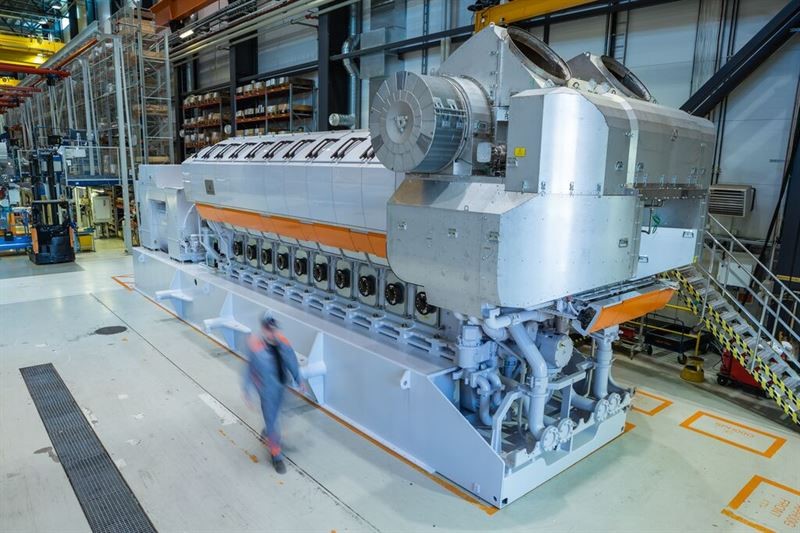
Given the high demand for gas turbines, he believes reciprocating internal combustion engines (RICE) should be considered, as they have shorter lead times. In some cases, he advocates RICE initially, with the facility transitioning to natural gas turbine-based generation when the machines are available.
BTM As A Temporary Solution
Duke Energy is a massive vertically integrated regulated gas and electric utility based in Charlotte, North Carolina, that serves over 7 million customers in the eastern US. It views BTM as an option only when grid power isn’t available. But even then, it is considered purely as a bridge until the grid can take over.
“Our customers want grid reliability,” said Jeff Joyce, director of engineering at Duke Energy. “If someone is putting in onsite power, it is either temporary or to be used in the future as a backup source. Most data centers don’t want to own and operate power plants.”
As large gas turbines are sold out until 2029 or 2030, some are attempting to deploy many small turbines or gas engines. Joyce believed that deploying many small diesel or gas units is a long-term or cost-effective approach for AI data centers. He argues that just because you can get a piece of equipment faster doesn’t mean you can build it quicker. You still need to gather your air and water permits, obtain interconnect approval, and arrange transmission.
“Large turbines are a better option,” said Joyce, although the grid remains preferable to onsite generation in most cases.”
He gave the example of a 1.2 GW Amazon data center planned for North Carolina. He doesn’t think it is feasible for Amazon to build and manage a power plant of that scale.
“For 50 MW or below, there are lots of BTM options,” said Joyce. “Large AI factories, however, need to be powered by the grid.”
Availability Is King
When data centers were in the 5 MW to 50 MW range, they could be treated like a traditional commercial user. Two years ago, things changed. They jumped to 200 MW or more. Nowadays, they are being specified at 1 GW to 2 GW.
“There has been about 20 GW of growth in the ERCOT [Electric Reliability Council Of Texas] grid in the last 20 years,” said Jake Bissel, director of business development at CPS Energy of San Antonio, Texas. “We expect to see 70 GW in less than10 years.”
CPS Energy took more than 100 years to build 6 GW of peak load. Bissel expects to increase that load by a third in the next few years. Behind that sits a queue for 25 GW more. The utility intends to bring on all that power in a way that does not affect residential electricity rates.
He agrees with Joyce that the grid is the best choice for large data centers that have little tolerance for downtime.
“Data center customers want 99.999% power availability, and that is solved by connection to the grid,” said Bissel. “Some developers might get involved in building a power plant, but they will probably end up selling that power to the grid when they have a reliable grid connection.”
There may appear to be energy security in building your own power plant. But it can be risky if a turbine outage lowers capacity or the whole plant goes down. In any case, it takes two or three years to get permitted and complete construction.
“Lack of transmission and interconnection is the bottleneck,” said Bissel. “One customer bought turbines and substation equipment but has been kept waiting due to lack of transmission.”
Such problems are only likely to worsen for CPS Energy. Texas is the biggest hotspot for AI factory development. Land is relatively inexpensive, there are fewer regulatory hurdles, fewer natural disasters, good fiber connections, and bountiful gas availability.
Meanwhile, Texas Senate Bill 6 has made things even easier for utilities. It has instituted batch processing of interconnect requests rather than a more ponderous one-at-a-time system. Additionally, part of the burden of grid infrastructure build-out is passed on to data centers.
“Senate Bill 6 standardizes interconnect fees and apportions transmission costs fairly, so data centers pay their share better,” said Elaina Ball, chief strategy officer at CPS Energy.
The company’s strategy is to add as many energy resources as possible. This includes a wide range of wind, solar, battery, BTM, and natural gas assets. In addition to building new gas plants, it also acquired several operating natural gas plants from ProEnergy in recent months.
“Our demand forecast has more than doubled, so we will be building, and we will be buying,” said Ball. “We constantly find solutions to lessen environmental impact, and natural gas is good for that. But over the past year, the dialogue has changed, and speed to market dominates the conversion, not decarbonization.”
Future Uncertainty
Forecasts for future loads are all over the map. But even the conservative ones expect high growth. Meanwhile, debate ranges between whether we face an AI bubble or an AI boom.
Jennifer Knott, executive director for strategy implementation at NextEra Energy, pointed out that nobody really knows what the future holds. No one has ever brought a 1 GW data center for AI onto the grid.
“The rules are not yet written on how to bring on large loads so partnerships with developers, ISOs, hyperscalers, and utilities are essential,” said Ball.