The Promise Of Ammonia
Baker Hughes Partners With Hanwha On The Development Of Gas Turbines That Run on Ammonia
By Drew Robb
The last few years have seen a lot of attention given to gas turbines that can operate on hydrogen. But a more practical solution, in some cases, may be machines that run on ammonia.
Baker Hughes and Hanwha are partnering to develop small-size ammonia turbines. The agreement focuses on the creation of dual-fuel turbines that are capable of 100% ammonia combustion. One of the design goals is to deliver efficiency comparable to reciprocating engines while minimizing carbon emissions. The initial market will be the shipping industry.
“Decarbonizing hard-to-abate industries and transportation is one of the most pressing but high-potential opportunities of our time,” said Alessandro Bresciani, senior vice president of climate technology solutions at Baker Hughes. “We believe fuel switching to ammonia will play a key role in achieving significant emissions reductions across these sectors; to realize this ambition, the industry needs more partnerships such as this.”
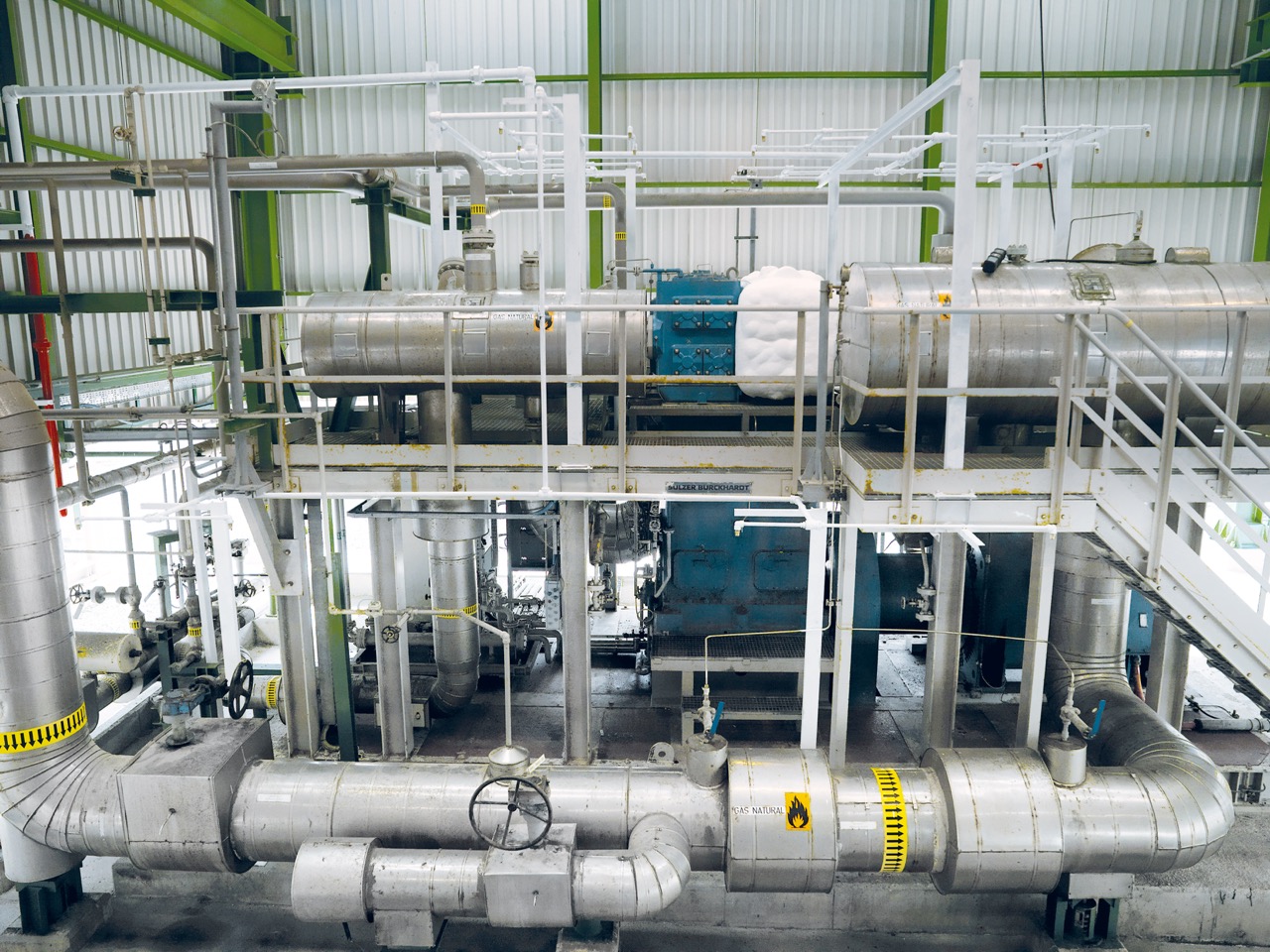
Hanwha Power Systems is no stranger to the gas compression business. It provides an extensive line of API 617 process gas units. These include fuel gas compressors, boil off gas compressors, steam compressors, high pressure compressors, vapor recovery compressors, offshore liquefied natural gas (LNG) compressors, gas liquefaction compressors, and turbo expanders. Now it is turning its attention to ammonia compression for marine applications.
“Switching to lower carbon fuel for ships is the calling of the times,” said Executive Director Kim Hyeong-seok, head of Hanwha Power Systems’ Marine Solutions Business Department.
Solving Hydrogen’s Impracticalities
Hydrogen has dominated the headlines for the last few years as a potential alternative to natural gas. On paper, running existing turbines on hydrogen and eliminate carbon emissions sounds great. However, there are some serious challenges to consider. For example, existing combustion systems need major modifications or must be replaced entirely; hydrogen is far less dense than natural gas and requires enormous storage facilities; it is far more flammable, posing safety concerns. In addition, the natural gas pipeline network can’t hold hydrogen effectively and would need to be upgraded or replaced at an enormous cost.
Despite government backing and hefty subsidies around the world, clean hydrogen investment fell dramatically in 2024. From US$100 million in 2020 to US$600 million in 2021, US$3.6 billion in 2022, and US$14.3 billion in 2023, it appeared that hydrogen investment was on an exponential trajectory. But hydrogen has run into the wall of harsh reality. Investment fell to US$8.4 billion in 2024. Most of that went into electrolyzers that aim to use excess renewable energy to create clean hydrogen.
Attention is now turning to ammonia as a possible decarbonization alternative to hydrogen. Since it contains no carbon, it does not emit carbon dioxide when burned. Companies like Siemens Energy, GE Vernova, Baker Hughes, Mitsubishi Power, IHI, and Hanwha, to name a few, note increased interest in ammonia among their customers.
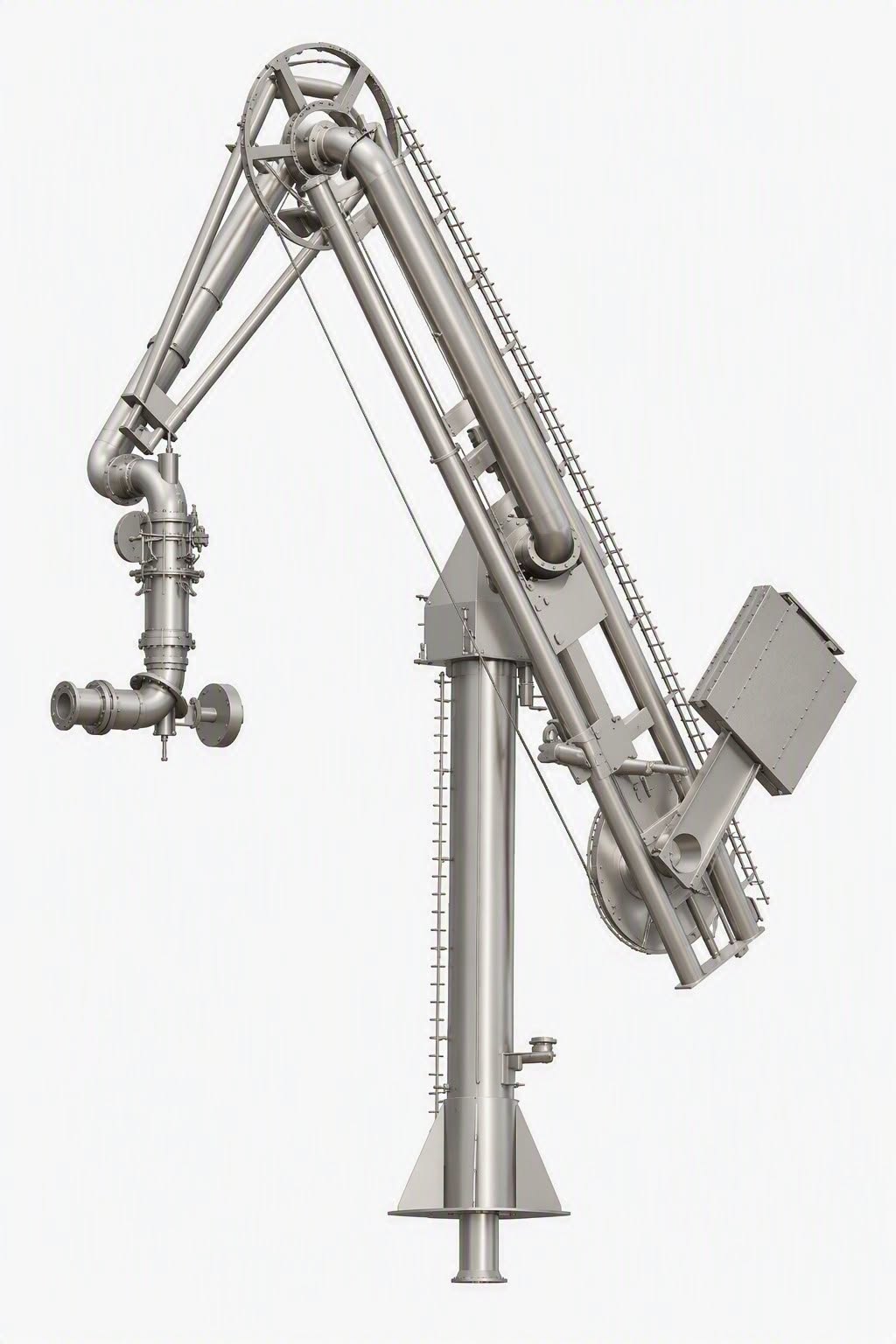
Ammonia, after all, is already heavily utilized in industrial applications such as fertilizers and chemicals. Unlike hydrogen, there is an abundance of existing infrastructure in place to store, transport, and use it. Ammonia could even find a market as a shipped fuel like LNG. After all, it isn’t economical to move liquid hydrogen over long distances. Liquid ammonia is far cheaper and easier to ship. Currently, there are about 20 MTPA of ammonia being transported around the world.
Its physical properties explain why. Ammonia turns from a gas to a liquid at -28.4˚F (-33.6℃). Natural gas becomes LNG at – 258.7˚F (-161.5℃). Hydrogen only liquefies at -423.4˚F (-253℃). That’s almost absolute zero. Ammonia, then, requires far less cryogenic compression than LNG or hydrogen.
Baker Hughes – Hanwha Partnership
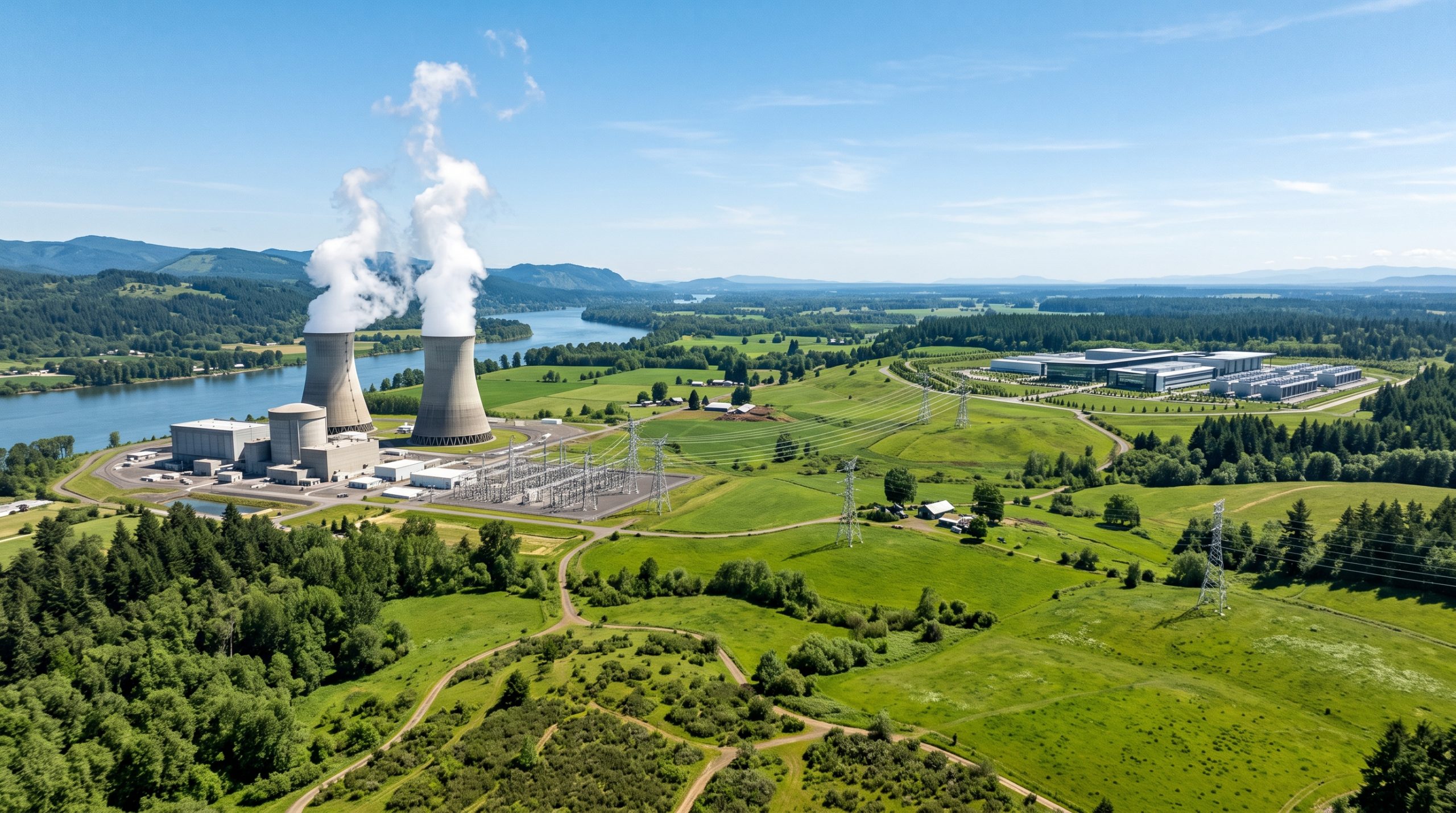
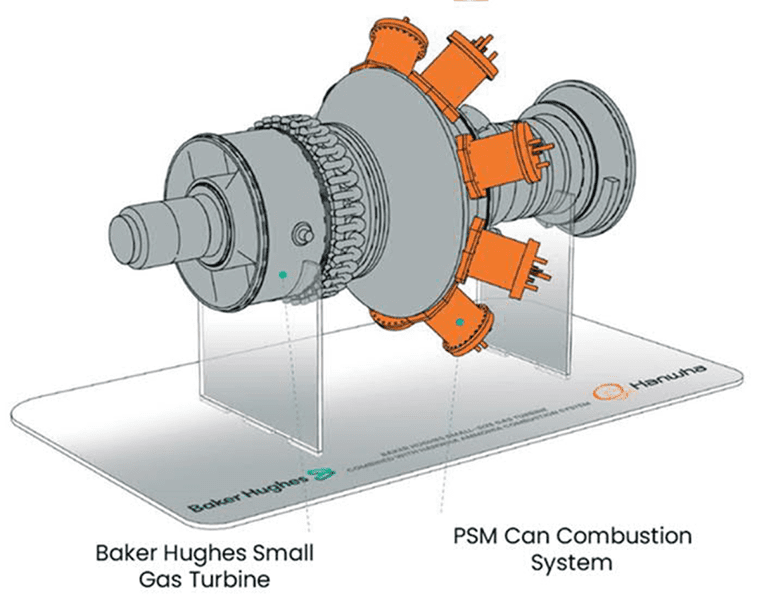
Ammonia’s potential has generated sufficient excitement that Baker Hughes, Hanwha Power Systems, and Hanwha Ocean have signed a Joint Development and Collaboration Agreement (JDCA) for a new turbine for ammonia applications. It will leverage Baker Hughes’ small-size gas turbine technology and Hanwha’s ammonia combustion system. The new machine will be suitable for marine applications, onshore and offshore oil and gas applications, and can be deployed for electric generation and mechanical drive. Korean shipbuilder Hanwha Ocean will be an immediate beneficiary of the JDCA. It will adopt the new turbine as a propulsion system for future vessels as part of its maritime decarbonization plans.
Hanwha has already successfully tested a proof-of-concept (POC) combustor with 100% ammonia as the fuel gas. Baker Hughes has also completed a turbine feasibility study in 2024. The two companies target a full engine test with ammonia by the end of 2027, after which the turbine should be commercially available to order.
16 MW Turbine
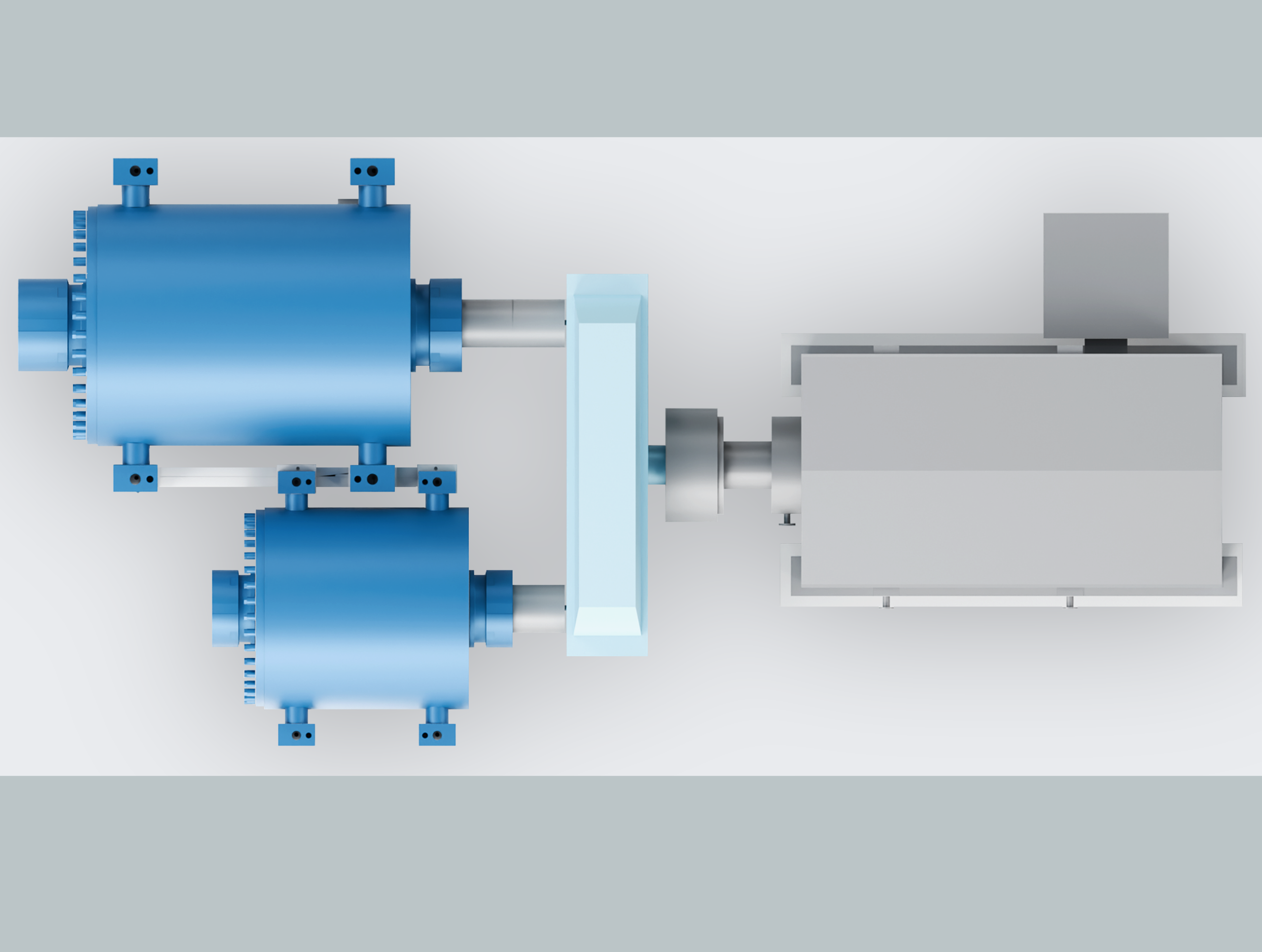
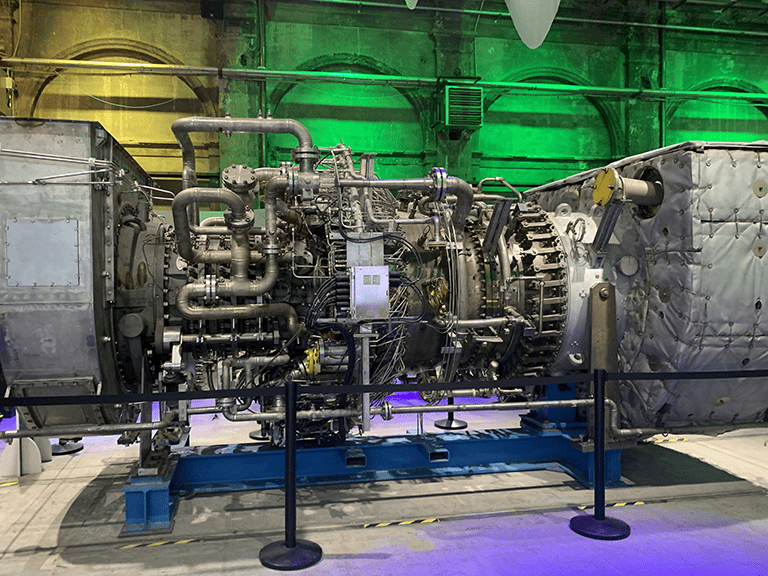
The current plan is for Baker Hughes to develop a turbine in the 16 MW power range.
“We will leverage experience in our NovaLT turbine family as we develop a machine specifically for ammonia,” said Raimondo Giavi, Vice President of Hydrogen at Baker Hughes. “This enables us to leverage more than a decade of our experience in the light industrial space.”
The NovaLT16 gas turbine was launched in 2014. Since then, the company has released two smaller versions – the NovaLT12 and the NovaLT5. Initially, they were expected to mainly be used in pipeline compression stations and oil and gas compression applications. But they have gained a following in power generation. That experience is being challenged toward ammonia. The NovaLT16 can currently run on natural gas, 100% hydrogen, or a blend of both.
Giavi said that Baker Hughes already has decades of experience with ammonia. The company boasts the largest fleet of ammonia compression equipment and is present in every ammonia plant in the world.
Like hydrogen, ammonia poses distinct challenges. Giavi noted that NOx emissions will have to be tackled if ammonia is to become a viable fuel. Toxicity, too, is an issue. But ammonia’s long track record in industrial applications means that safety protocols are mature and broadly available, along with experienced personnel who are used to dealing with it.
“We aspire to have broadest range of fuel applications in combustion technology,” said Giavi. “We soon will be able to offer natural gas, hydrogen, ammonia, and any blend in between.”
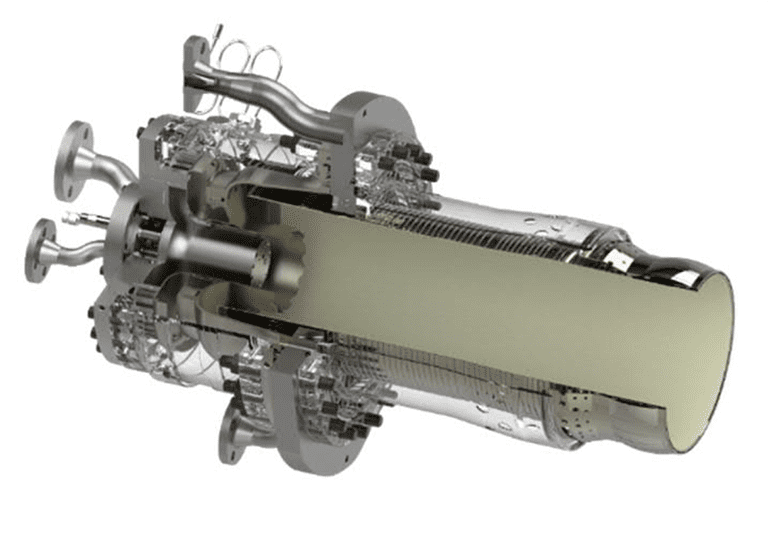
Hanwha Combustion System
Hanwha’s ammonia combustion system will harness technology developed by its PSM subsidiary. PSM has more than 20 years of experience in developing combustors that compete well with those developed by turbine manufacturers.
“PSM already has a tested ammonia combustor so we will join forces with them to develop a one-of-a-kind machine to decarbonize the maritime market,” said Giavi. “As decarbonization is complex and expensive, cooperation is the only way forward.
PSM has decades of experience in combustor development and optimization. Its LEC-III combustor gained prominence about 20 years ago as an alternative to B, D, and E-class gas turbine from GE Vernova and Siemens Energy. More than 100 of these upgraded combustors are either installed or contracted. About a decade ago, the company developed its FlameSheet combustor which found favor in the 7F turbine fleet and has more than 50 units installed or contracted.
“After gaining experience with natural gas combustion, we have since added hydrogen-burning capabilities,” said Jeff Benoit, vice president of clean energy solutions at PSM.
“Ammonia is completely different to these gases, but we have the internal capabilities to develop an effective combustor.”
After successfully completing a POC on the ammonia combustor last year, PSM sent the unit to German Aeronautical Research Center (DLR) for testing. Benoit said the company learned a lot during the POC and from the initial DLR findings. These learnings are being used to address emissions from the burning of ammonia. Ongoing testing is looking into different thermal barrier coatings (TBCs), materials, and cooling features to contain emissions. The timeline for the delivery of the first production ammonia combustor is 2027. At that time, the combustor and turbine will undergo further testing, probably at the Baker Hughes testing facility in Italy.
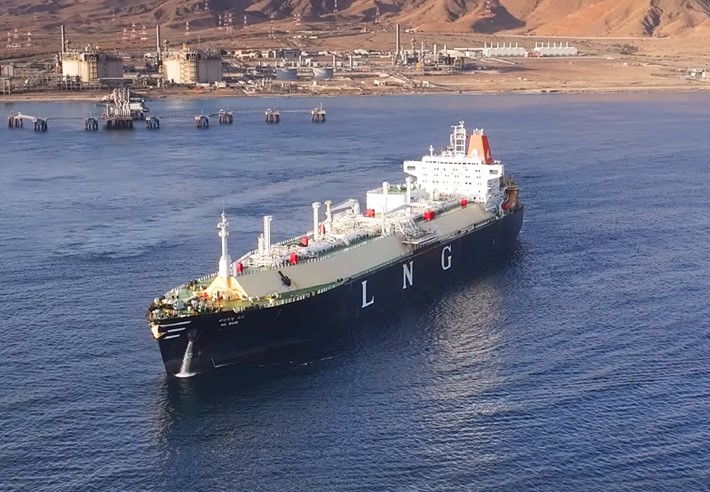
“A new Hanwha LNG tanker will be equipped with a combined cycle gas turbine that can operate on natural gas or ammonia as well as dual-fuel operation with a natural gas and ammonia blend,” said Benoit.
He added that early research revealed that the PSM FlameSheet combustor wouldn’t work well with ammonia. Its lean premix combustion approach is suitable for gas and hydrogen, but not ammonia, which has a lazier flame and oxidizes differently due to the presence of nitrogen. What is emerging is a dual state combustor consisting of a high flame temperature zone to convert ammonia to hydrogen and then a lean burn zone to prevent excessive oxides of nitrogen.
When ammonia is traditionally burned, it generates an excess of NOx. Typically, this is mitigated by using selective catalytic reduction (SCR), which adds to costs and the equipment footprint (an undesirable factor in shipping). The new combustor must be capable of meeting next NOX emissions standards from the International Maritime Organization known as IMO Tier 3 NOx emissions standards.
“We will meet IMO Tier 3 standards without SCR, which reduces both cost and complexity,” said Benoit. “This provides a competitive advantage over reciprocating engines that generally utilize SCRs.”
He surmised that ammonia import facilities could start to appear soon, especially in Europe. Once the shipment arrives at the coast, the ammonia is probably going to be cracked into hydrogen and sent via pipeline to support a nearby steel mill or power plant.
Ammonia Availability
Just as there isn’t that much hydrogen around, ammonia availability remains a concern. Those situated near petrochemical plants, refineries, and fertilizer production facilities should have no problem accessing ammonia. But its large-scale availability as a combustion fuel remains to be seen.
“Ammonia may not be broadly available at ports for now so LNG will continue to be the dominant form of liquefied fuel that is shipped around the world,” said Giavi.